
The 4Cs Made Simple: What Really Affects a Diamond's Appearance

Shop for a diamond for the first time and you'll quickly run into four letters: Cut, Color, Clarity, Carat. On a certificate, these show up as a wall of grades and abbreviations that can feel more intimidating than helpful. In reality, these four factors together decide how a diamond sparkles, how bright it looks on the hand, and how much it costs. Once you understand what each one actually measures, you stop shopping on gut feeling or sales pressure and start making a genuinely informed choice.
That's exactly what this guide to the 4Cs of diamonds explained is for: a clear, practical walkthrough of what each C really measures, which differences your eye can actually see, and which ones only ever show up on paper. By the end, you'll have a straightforward priority ranking you can use to spend where it counts and save where it truly doesn't matter. At Omara, we built our selection around this same principle — every diamond is graded transparently to the internationally recognized GIA standard, so you always know exactly what you're buying.
1. Cut
Cut is not the same thing as shape. Shape (round, oval, cushion, emerald, and so on) simply describes the outline of the stone. Cut describes how precisely the facets are angled and proportioned relative to one another — in other words, how well the diamond captures light, bends it internally, and sends it back out to the eye as sparkle. A diamond can have superb color and clarity and still look flat and lifeless if it's poorly cut. Conversely, an excellently cut stone can visually mask minor imperfections because the play of light draws the eye elsewhere. Cut is the one C that depends largely on craftsmanship rather than nature — and it has the single biggest impact on what people describe as a diamond's "fire" and "brilliance."
- Excellent / Ideal: near-perfect proportions and angles, maximum sparkle and light return.
- Very Good: excellent light performance, barely distinguishable from Excellent to the untrained eye.
- Good: solid light return, with minor deviations from ideal proportions.
- Fair: noticeably reduced sparkle, as light escapes through the sides or bottom of the stone.
- Poor: visibly dull and lifeless, even if color or clarity happen to be strong.
2. Color
The GIA color scale runs from D to Z. D is completely colorless — the rarest and highest grade — while Z describes a clearly visible yellow or brownish tint. The subtle differences in between are really only distinguishable under lab conditions, unmounted, and compared directly against master stones. Once a diamond is set in a ring, the metal around it further changes how color is perceived. In practice, this means diamonds graded G to H look colorless to the naked eye once mounted, yet they cost meaningfully less than the very top D-to-F range.
- D–F (colorless): the purest, rarest, and most expensive category, with no detectable tint.
- G–H (near colorless): essentially indistinguishable from D–F once set — the classic value sweet spot.
- I–J (faint tint): a very subtle warmth, usually only noticeable in side-by-side comparison.
- K–Z (increasingly yellow/brown): the tint becomes progressively more visible to the naked eye.
3. Clarity
Clarity describes how many inclusions (internal features) and blemishes (surface features) a diamond has — tiny natural traces of how it formed. The GIA scale runs from FL/IF (Flawless and Internally Flawless, essentially free of visible features) through VVS1/VVS2, VS1/VS2, and SI1/SI2, down to I1–I3, where inclusions can become visible to the naked eye. The term that matters most for everyday buying is "eye-clean": a diamond with no inclusions visible without magnification. That threshold typically sits around VS2 to SI1 — higher clarity grades are impressive on a certificate, but largely irrelevant to what you'll actually see.
- FL / IF: no internal inclusions visible under 10x magnification — extremely rare.
- VVS1 / VVS2: minute inclusions, difficult even for a trained gemologist to find under a loupe.
- VS1 / VS2: small inclusions visible under magnification, but typically invisible to the naked eye.
- SI1 / SI2: inclusions more readily visible under a loupe; SI1 is usually still eye-clean, SI2 depends on the stone and its inclusion placement.
- I1–I3: inclusions visible to the naked eye, sometimes affecting overall brilliance.
4. Carat
Carat is purely a unit of weight — one carat equals exactly 0.2 grams — not a measure of size. That surprises a lot of buyers, because two diamonds of identical carat weight can look noticeably different in size depending on how they're cut. A diamond cut too deep hides part of its weight beneath the setting, invisible once mounted, while an ideally proportioned stone puts its weight into visible spread, making it appear larger than the number on the certificate suggests. Price also doesn't scale in a straight line — it jumps disproportionately at round thresholds like 0.50, 1.00, 1.50, and 2.00 carats, because demand concentrates heavily around those exact weights.
- Weight, not size: 1 carat = 0.2 grams; the visible diameter also depends heavily on the cut.
- Price jumps: a diamond just under a round threshold (say, 0.90 rather than 1.00 carat) is often notably cheaper and barely smaller to the eye.
- A great cut beats raw weight: a beautifully cut 0.9-carat diamond can look larger than a poorly cut 1.0-carat stone.
Why cut drives the sparkle
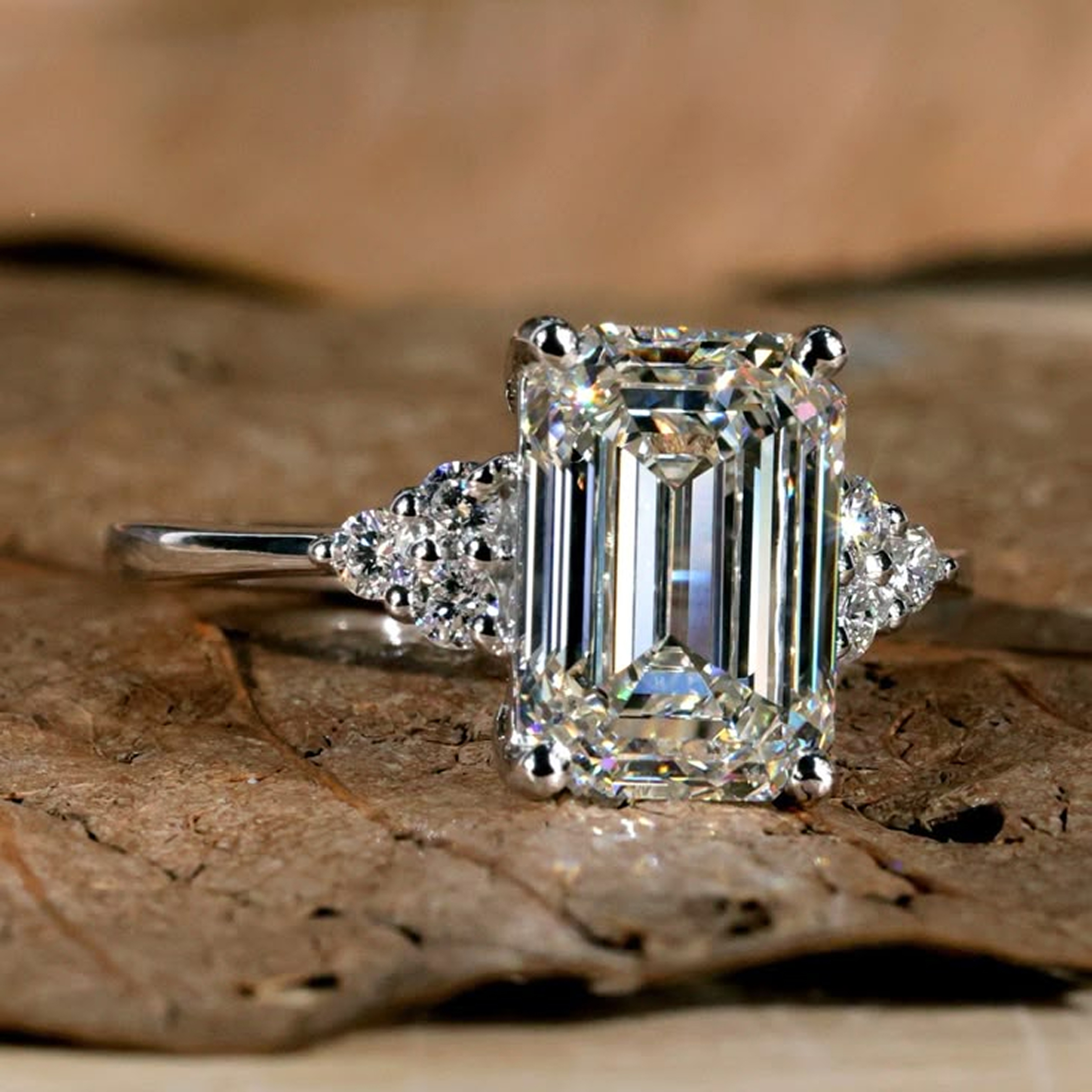
Think of a diamond as an arrangement of tiny mirrors: each facet redirects light in a specific direction. When the angles and proportions are precisely aligned, light bounces internally and exits as an intense, concentrated sparkle — what we perceive as brilliance. When the proportions are too shallow or too deep, light leaks out the sides or the bottom and is lost to the eye, no matter how fine the rough diamond originally was. That's why cut is the one C shaped almost entirely by human skill — and why it has the greatest influence on how a diamond actually looks.

Same weight, different presence
Two one-carat diamonds can look meaningfully different in size once set. The reason comes down to proportions: a stone cut too deep pushes weight into a zone that becomes invisible once mounted, while an ideally cut diamond "spends" its weight on visible spread. The practical takeaway: don't just look at the carat number — look at the relationship between weight, diameter, and cut quality. That's the real key to a diamond that looks bigger than it weighs.
| 4C | What it measures | Recommended "sweet spot" |
|---|---|---|
| Cut | How precisely facets capture and reflect light | Excellent / Ideal |
| Color | Degree of yellow/brown tint on the D–Z scale | G–H |
| Clarity | Visibility of internal inclusions and surface blemishes | VS2–SI1 |
| Carat | The diamond's weight (1 carat = 0.2 g) | Matched to budget, setting, and an excellent cut |
The practical priority ranking: where to actually spend
If your budget isn't unlimited — and for most people it isn't — it pays to weight the 4Cs by how much they actually affect appearance, rather than chasing the highest grade across the board. Here's our recommended order:
- Cut first. It has the single biggest effect on sparkle and therefore on the diamond's overall impression. Don't compromise here — aim for at least Very Good, ideally Excellent.
- Carat to personal preference. Decide what size feels right for you or the person wearing it, then pair that size with the best cut you can — rather than chasing raw weight.
- Color: save a grade. A G or H diamond is essentially indistinguishable from D–F once set, and costs noticeably less.
- Clarity: the easiest place to save. VS2 or SI1 is typically eye-clean — the difference versus VVS or FL is invisible to the naked eye, but very visible in the price.
In short: spend where the eye can actually tell the difference — cut, and the size you want. Save where only the certificate knows the difference — color and clarity, each a grade or two below the very top.
Ready to put the 4Cs into practice? Our Buying guide / filter diamonds lets you set cut, color, clarity, and carat against your own budget and preferences, so you can find the diamond that's genuinely right for you.
Frequently Asked Questions About the 4Cs
Next article
What a Diamond Certificate Actually Means (and Why It Matters)
Buying a diamond and want to be sure you're getting exactly what you pay for? An independent certificate isn't just an extra piece of paper—it's your guarantee of quality and transparency. In this article, we explain why it matters, how to properly read its parameters, and why you should only trust internationally recognized labs like GIA and IGI when making your choice.