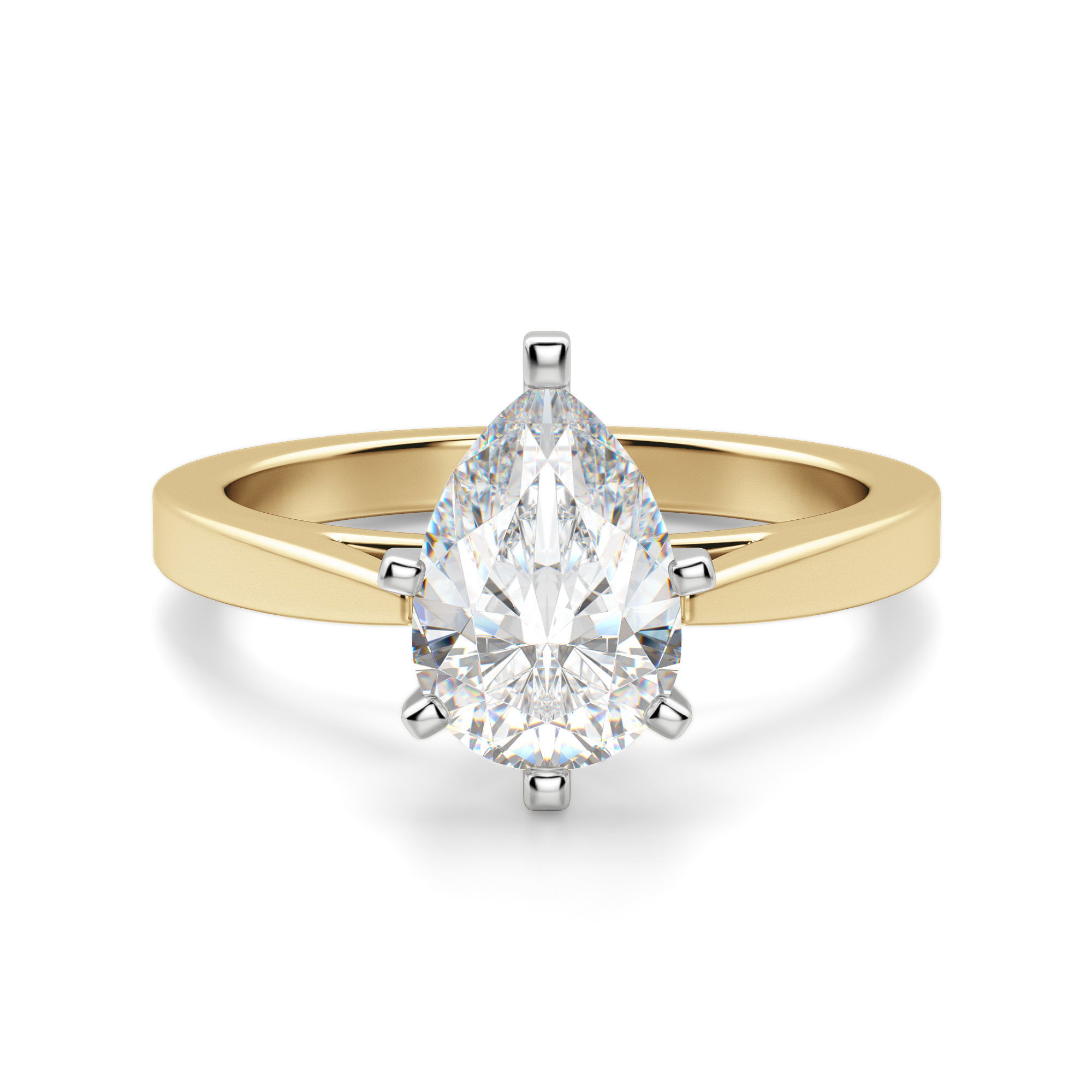
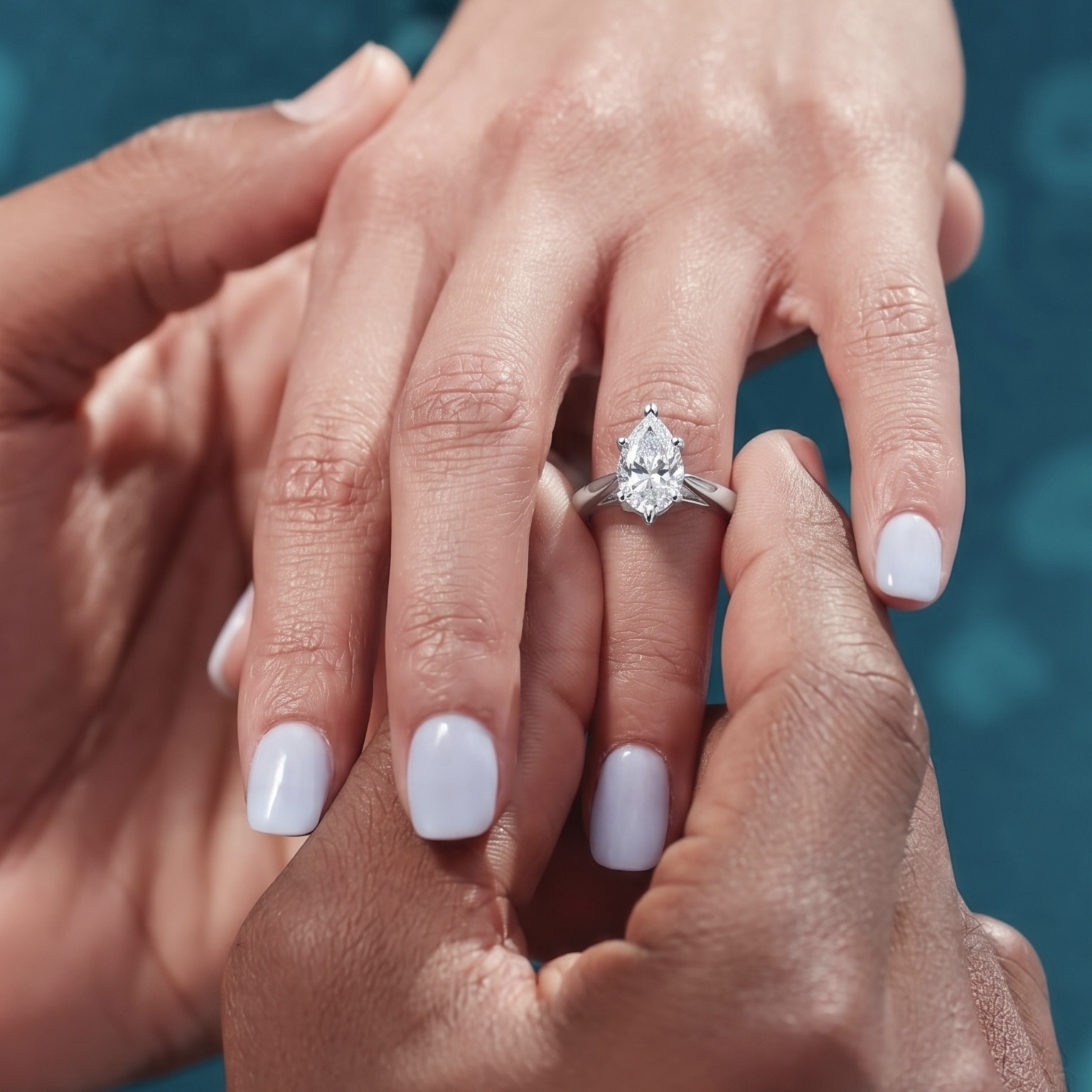
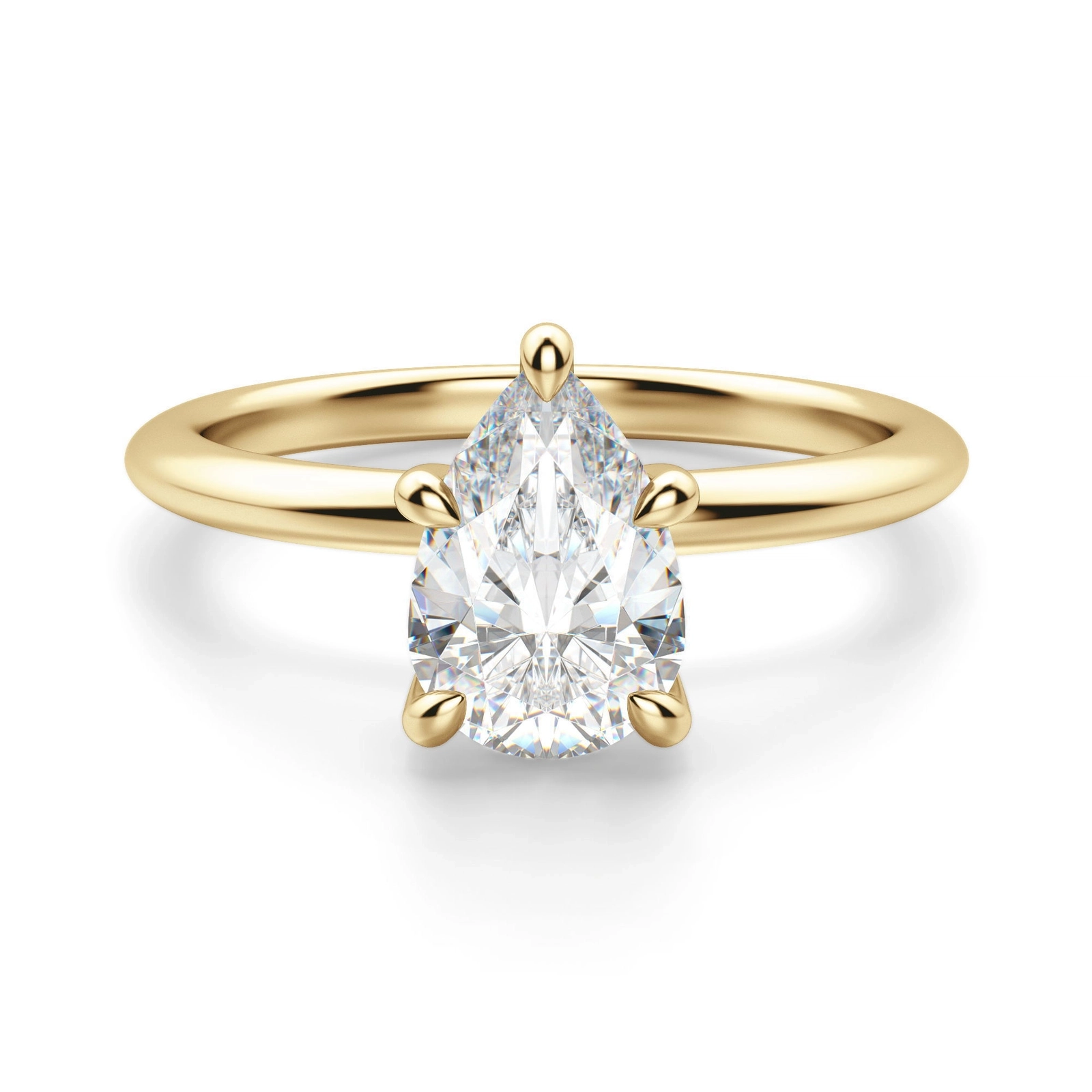
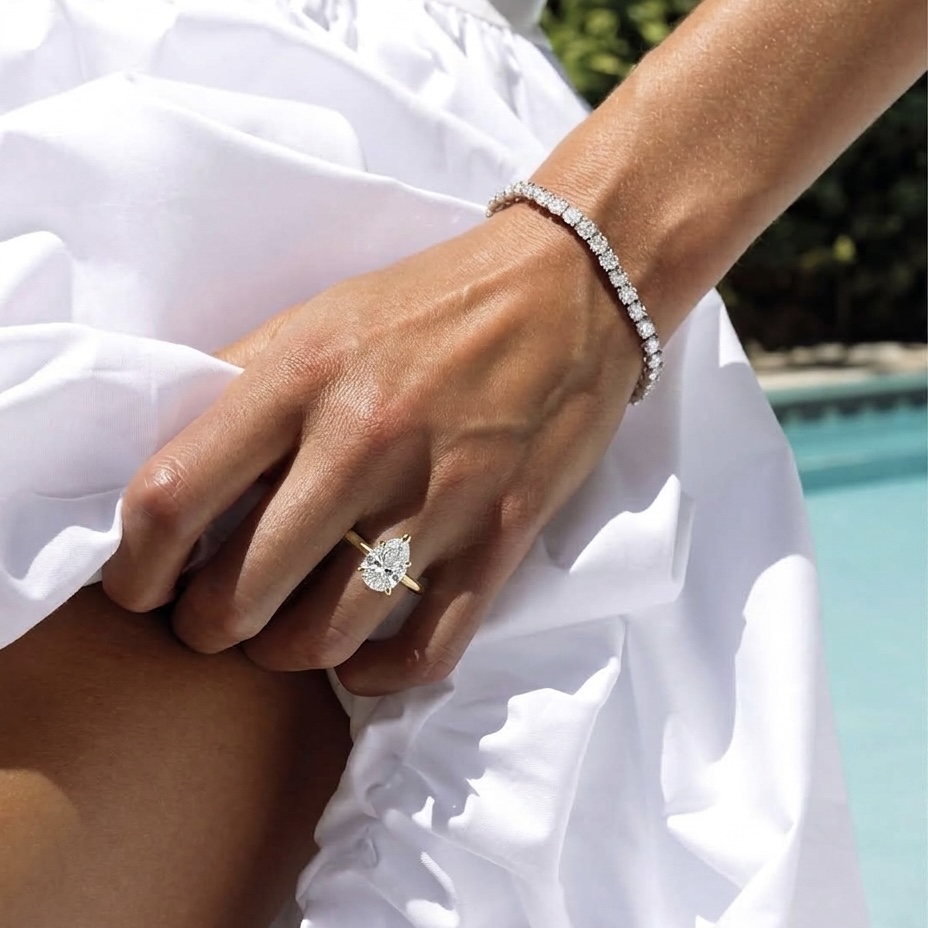
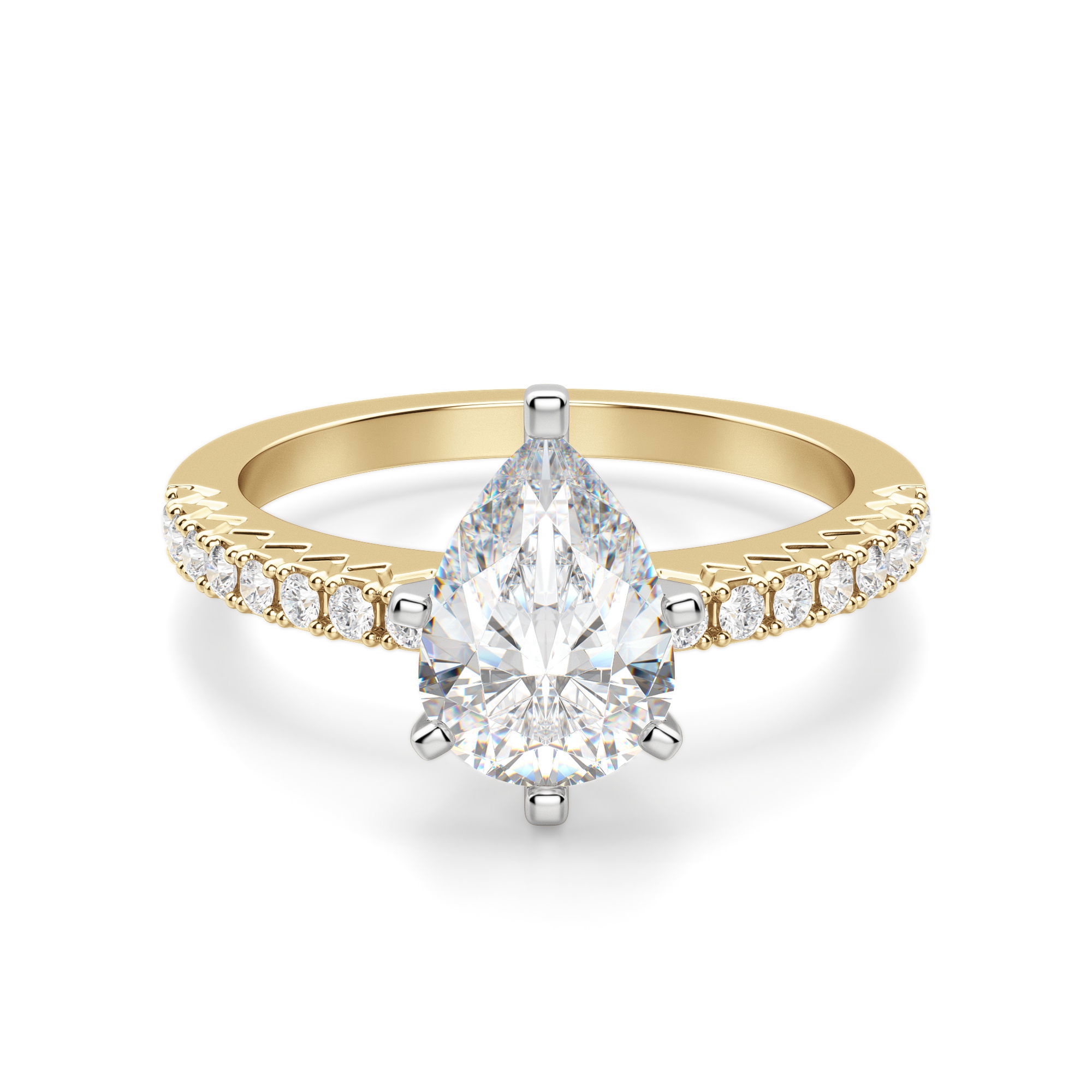
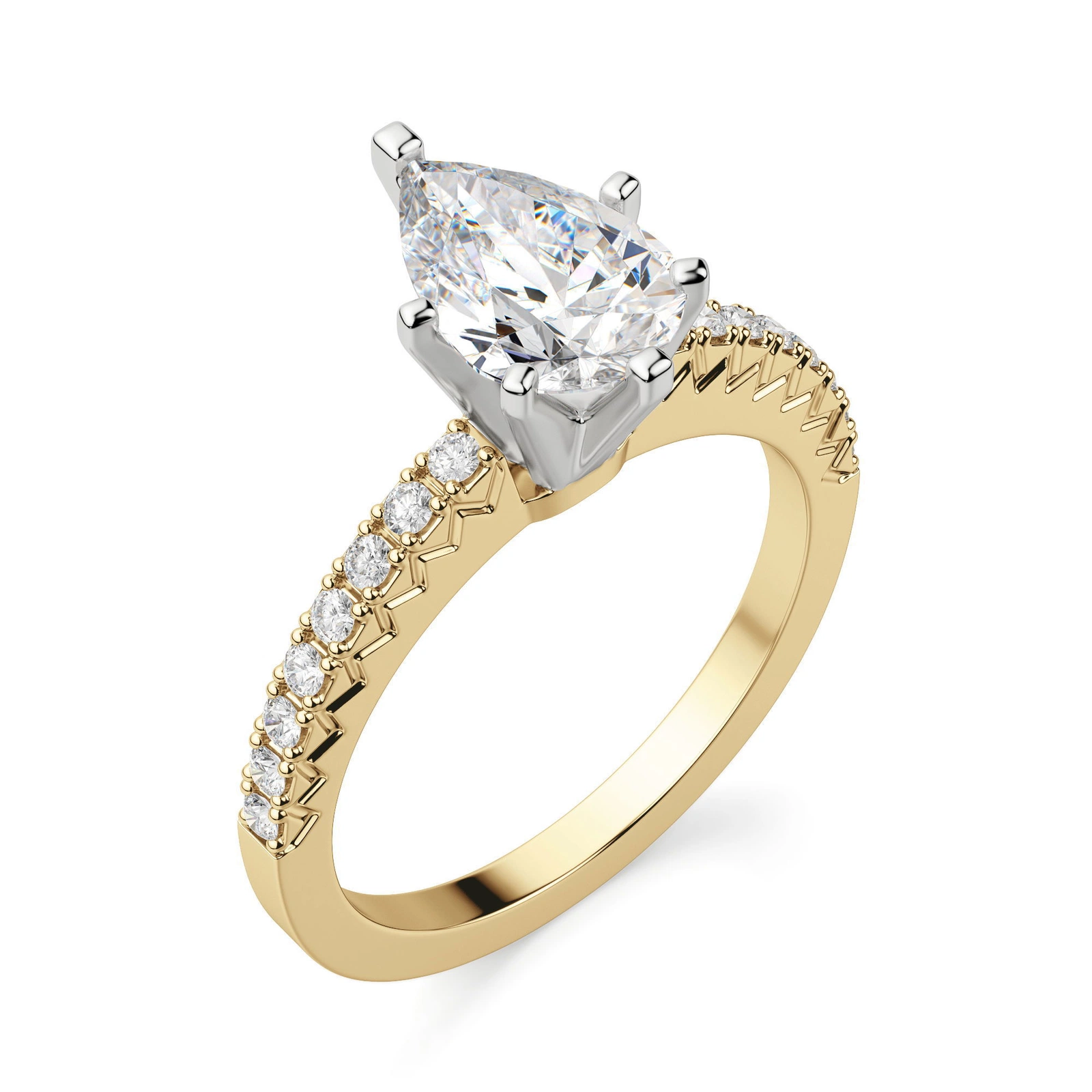
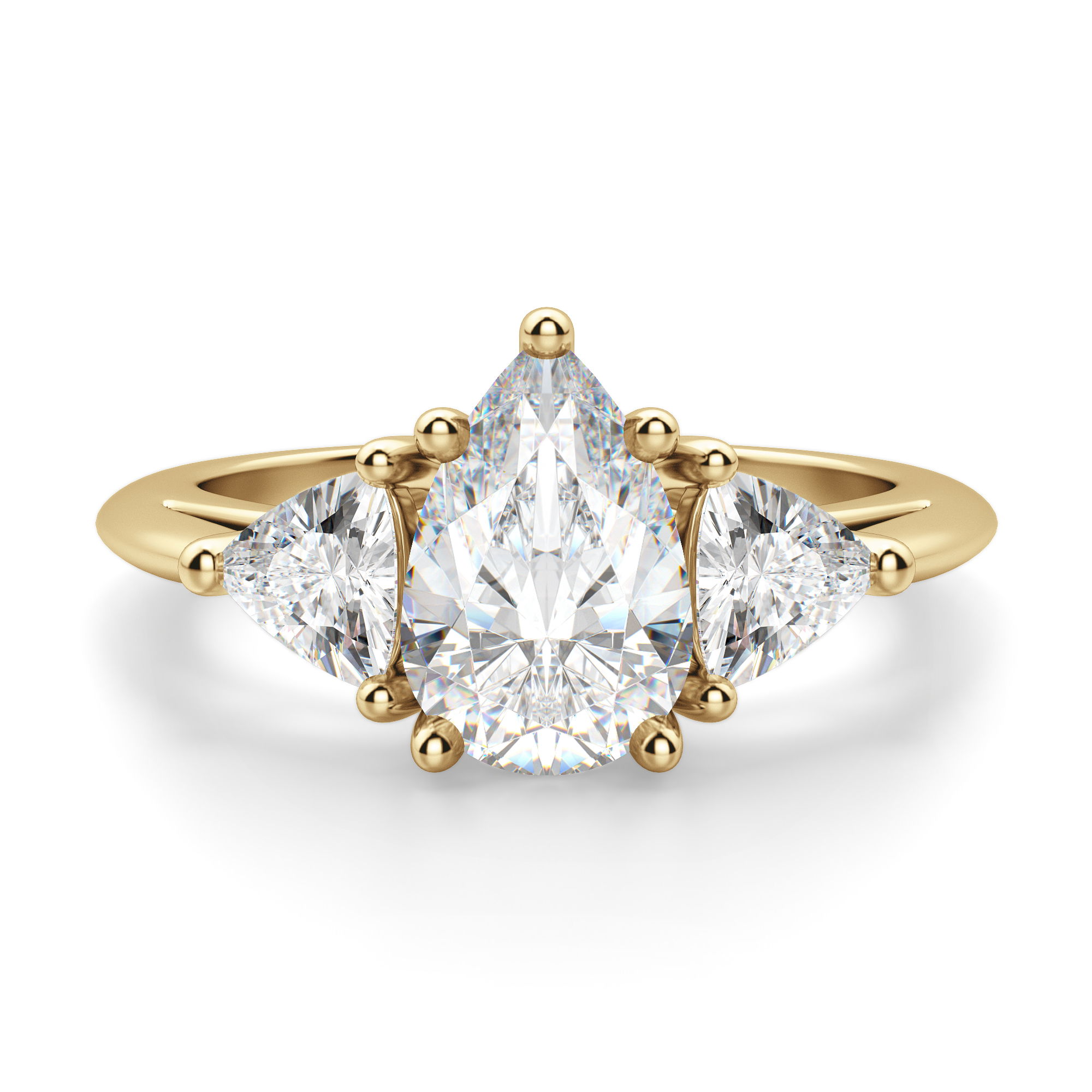
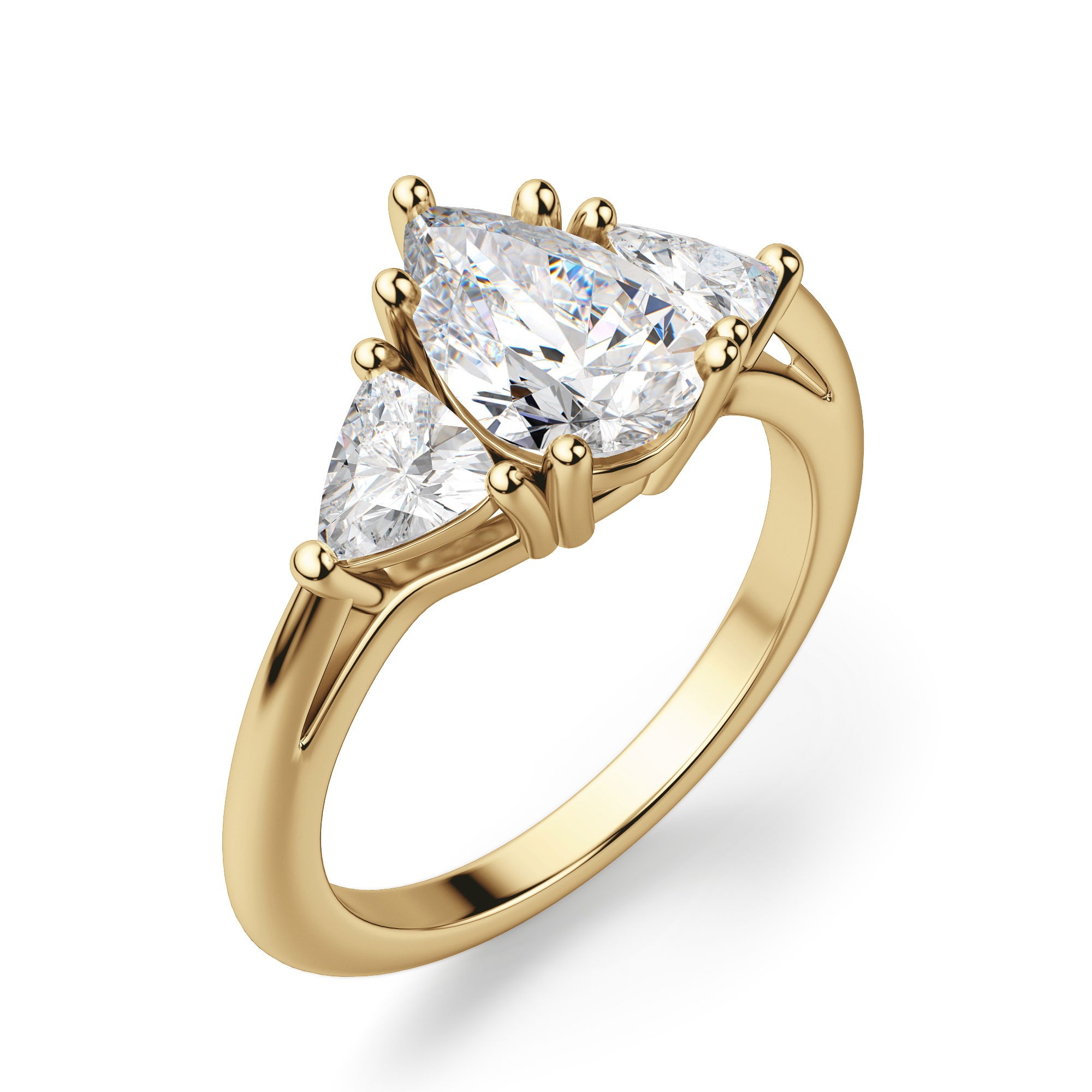
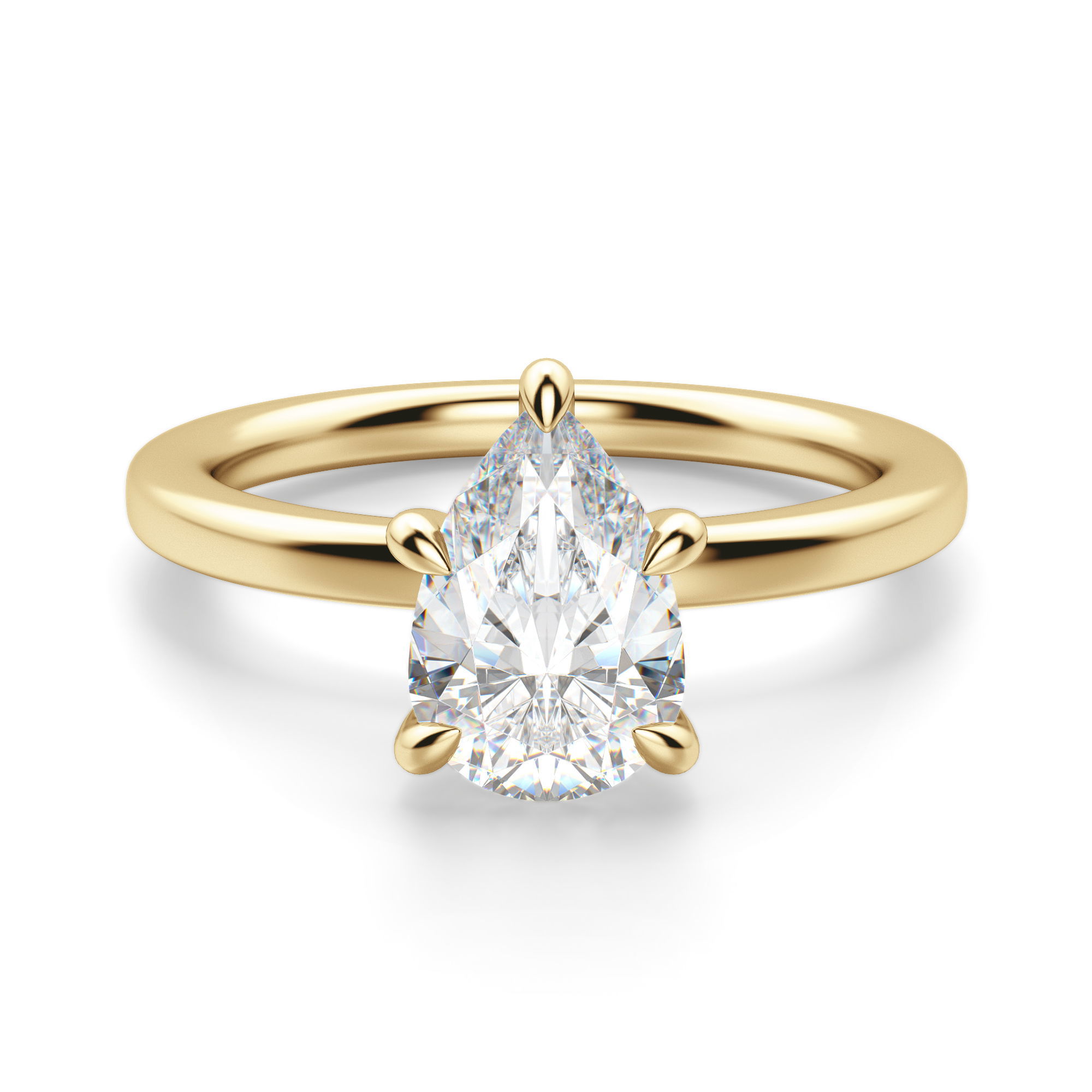
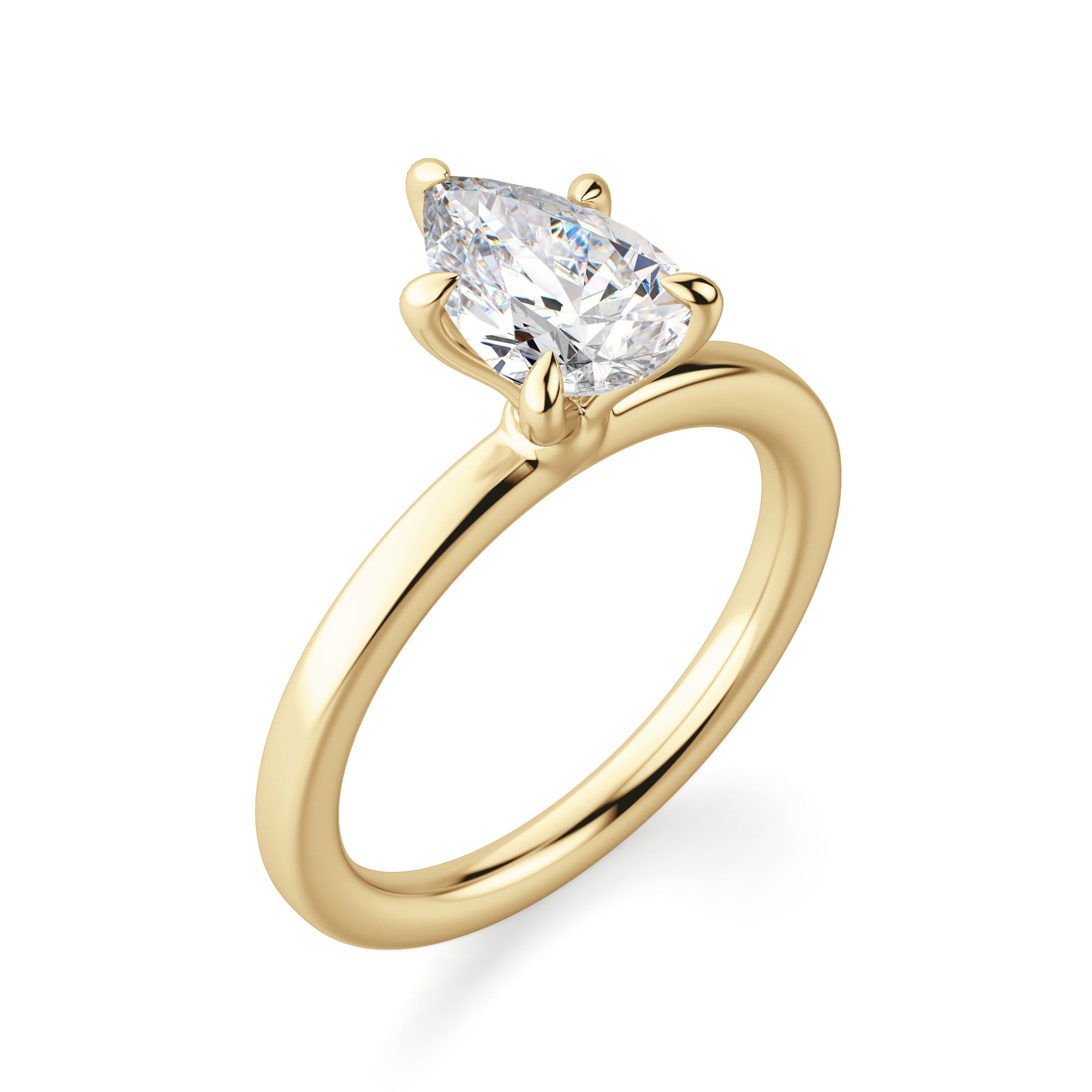
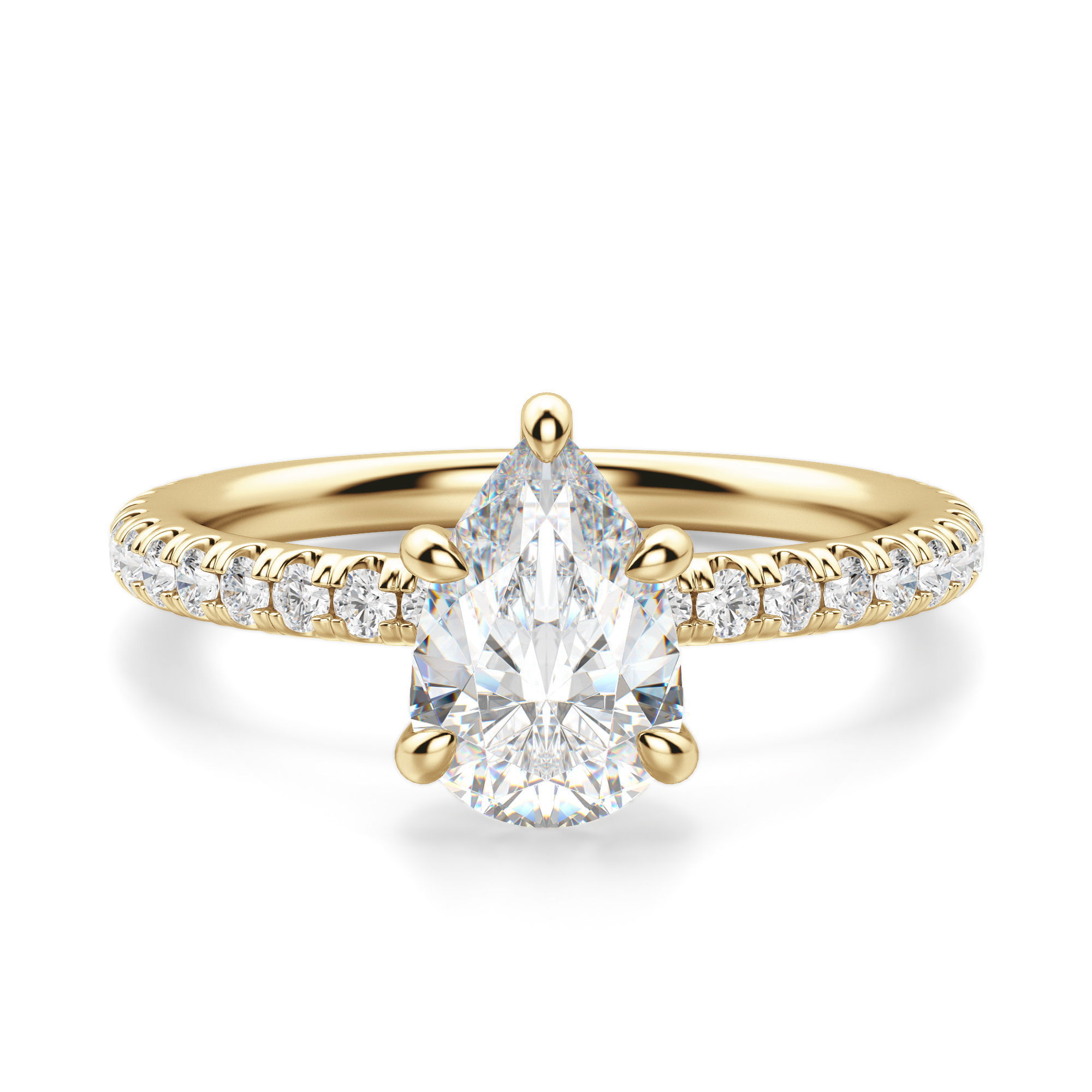
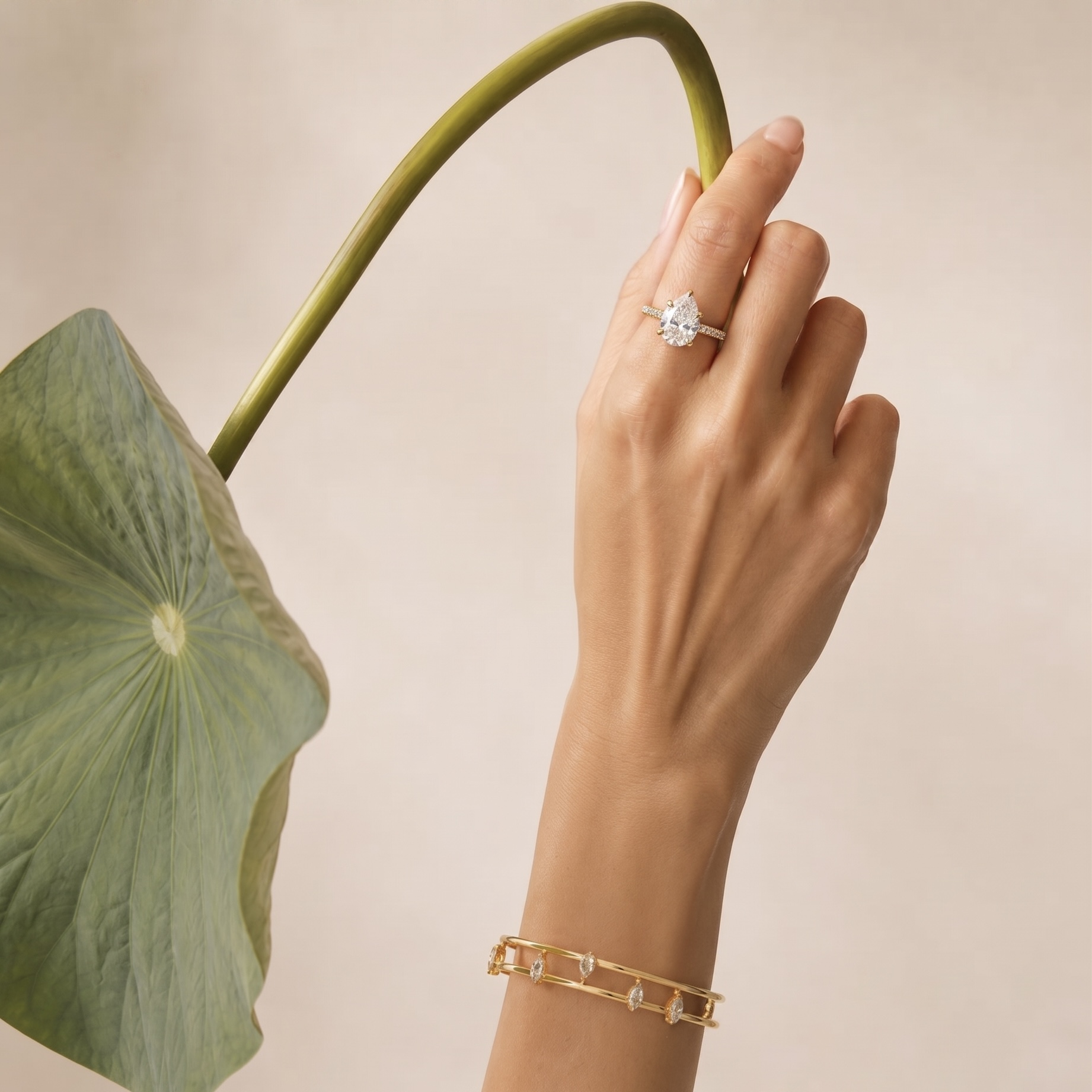
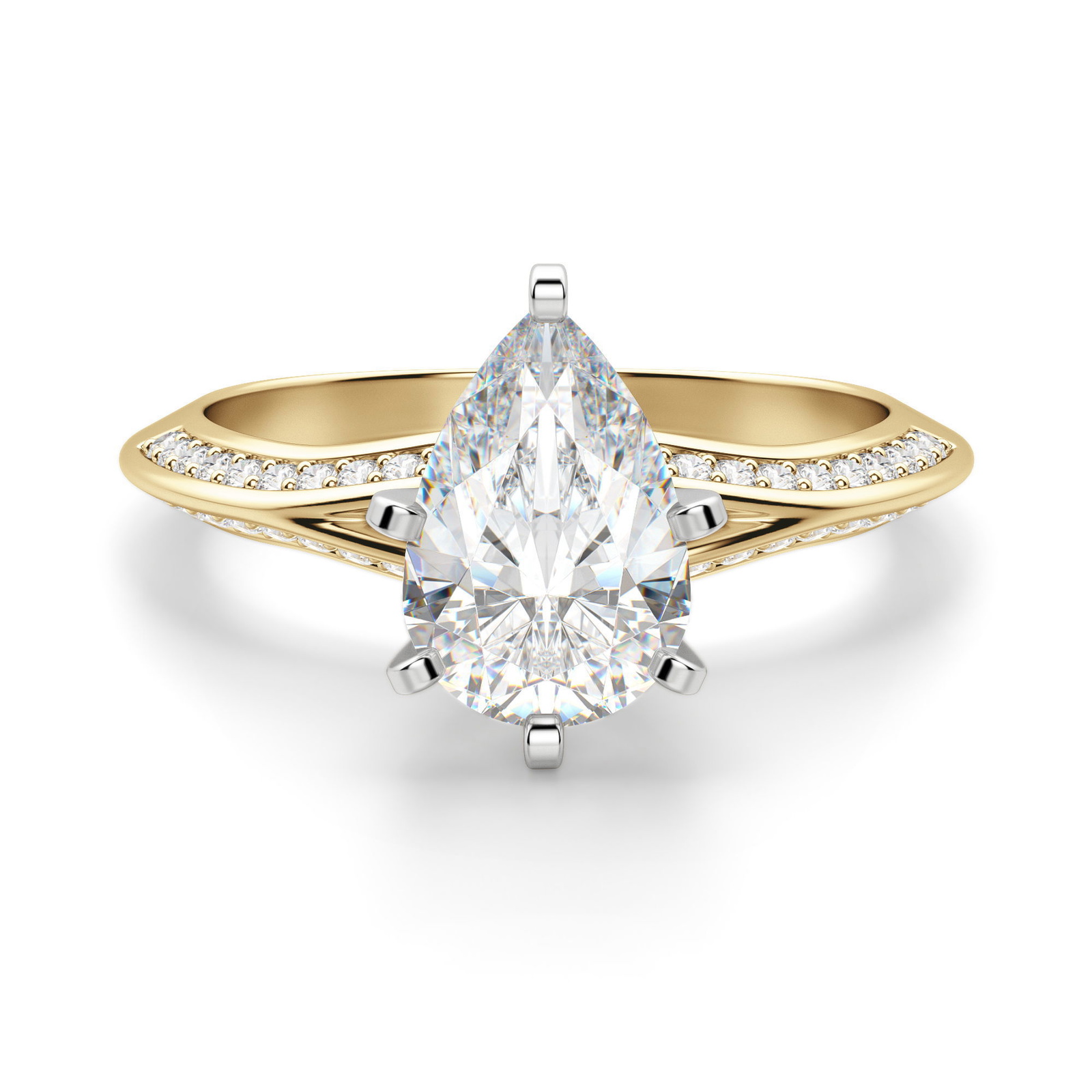
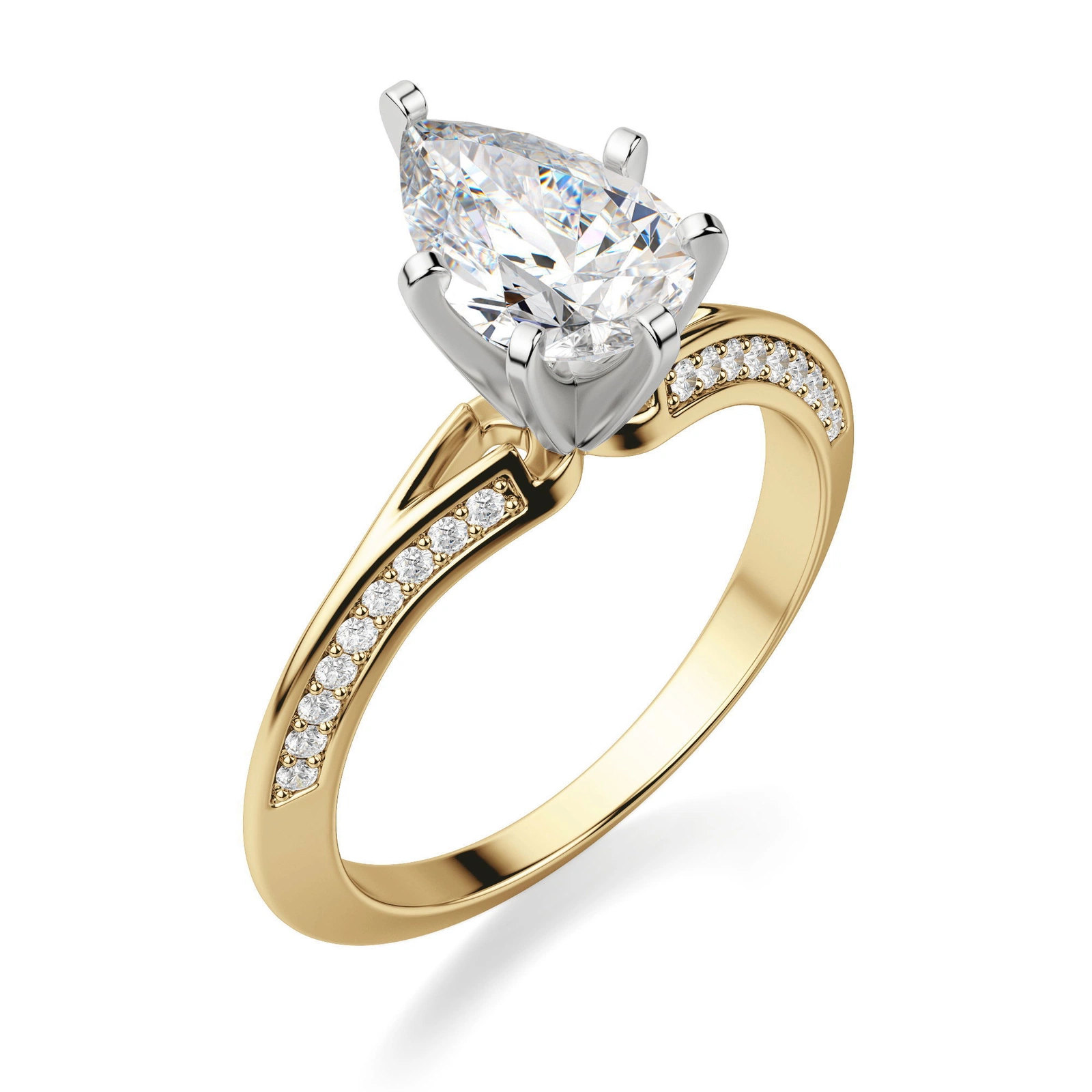
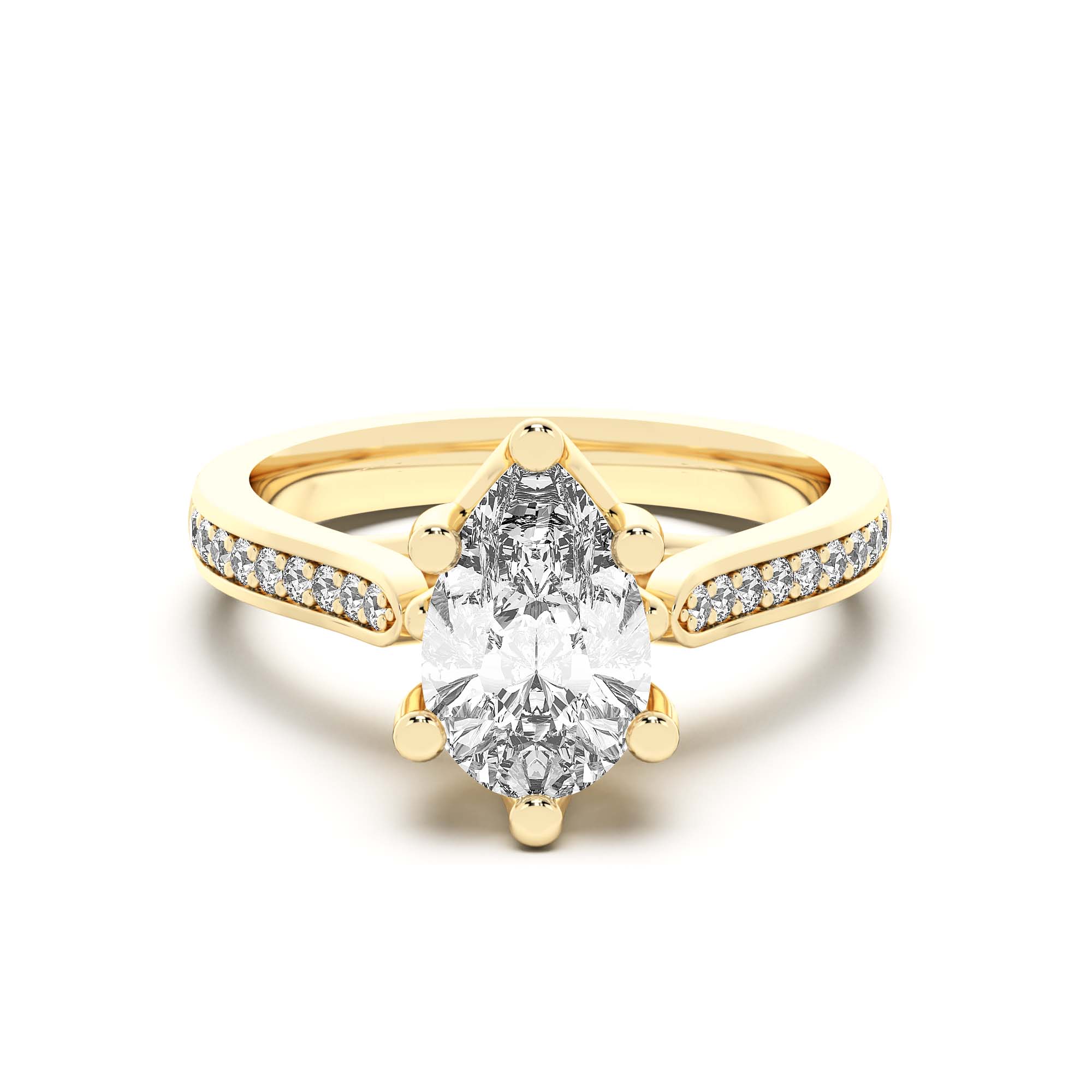
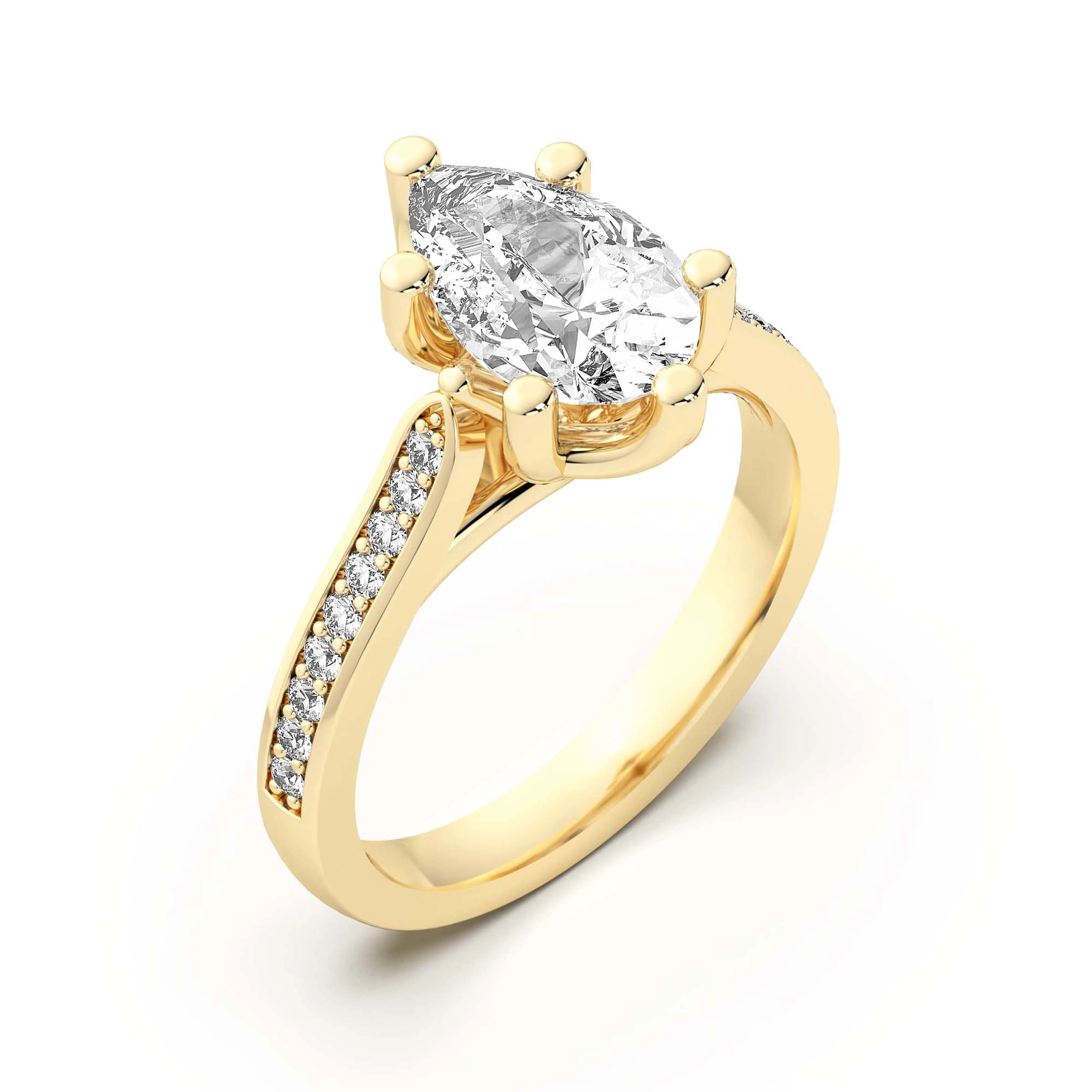
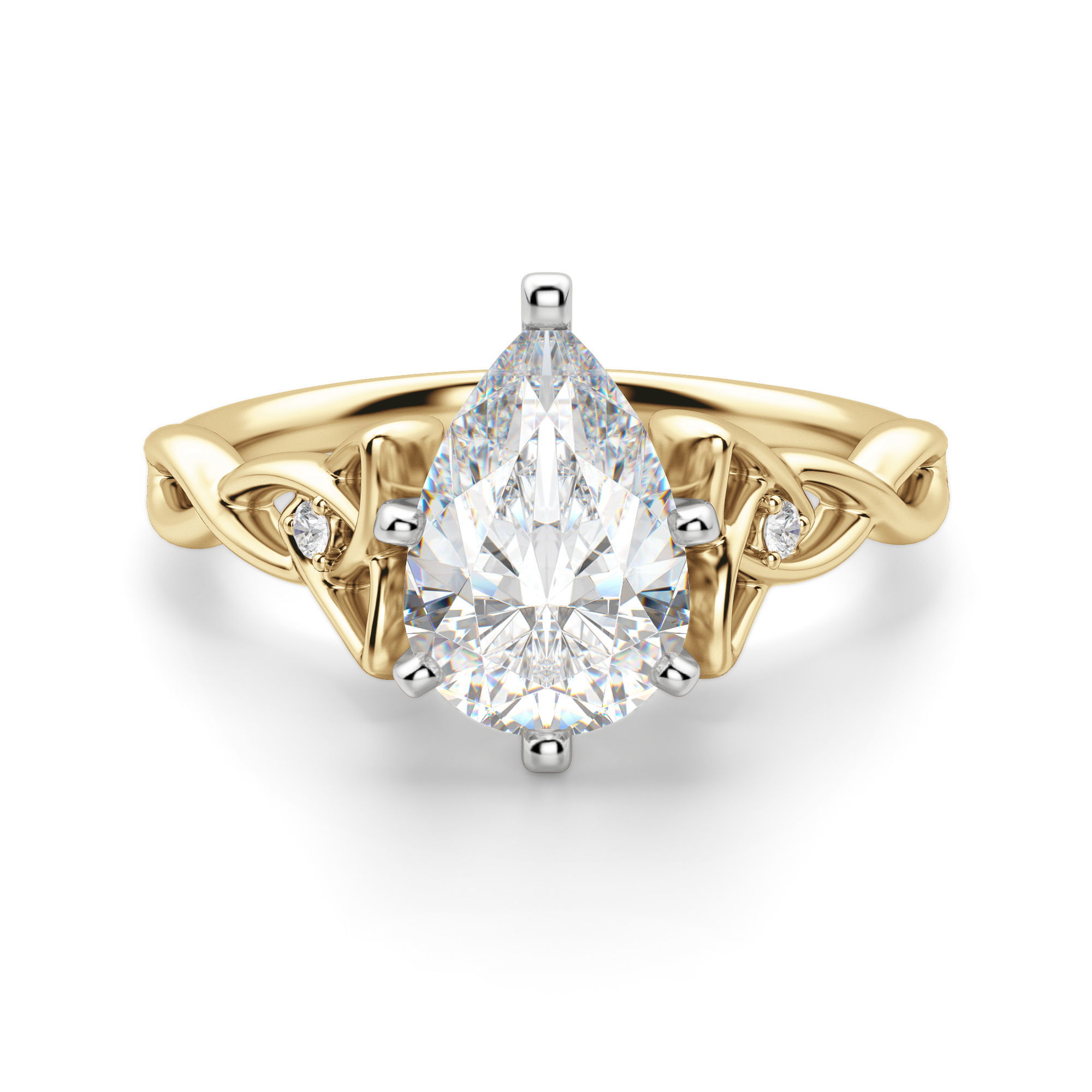
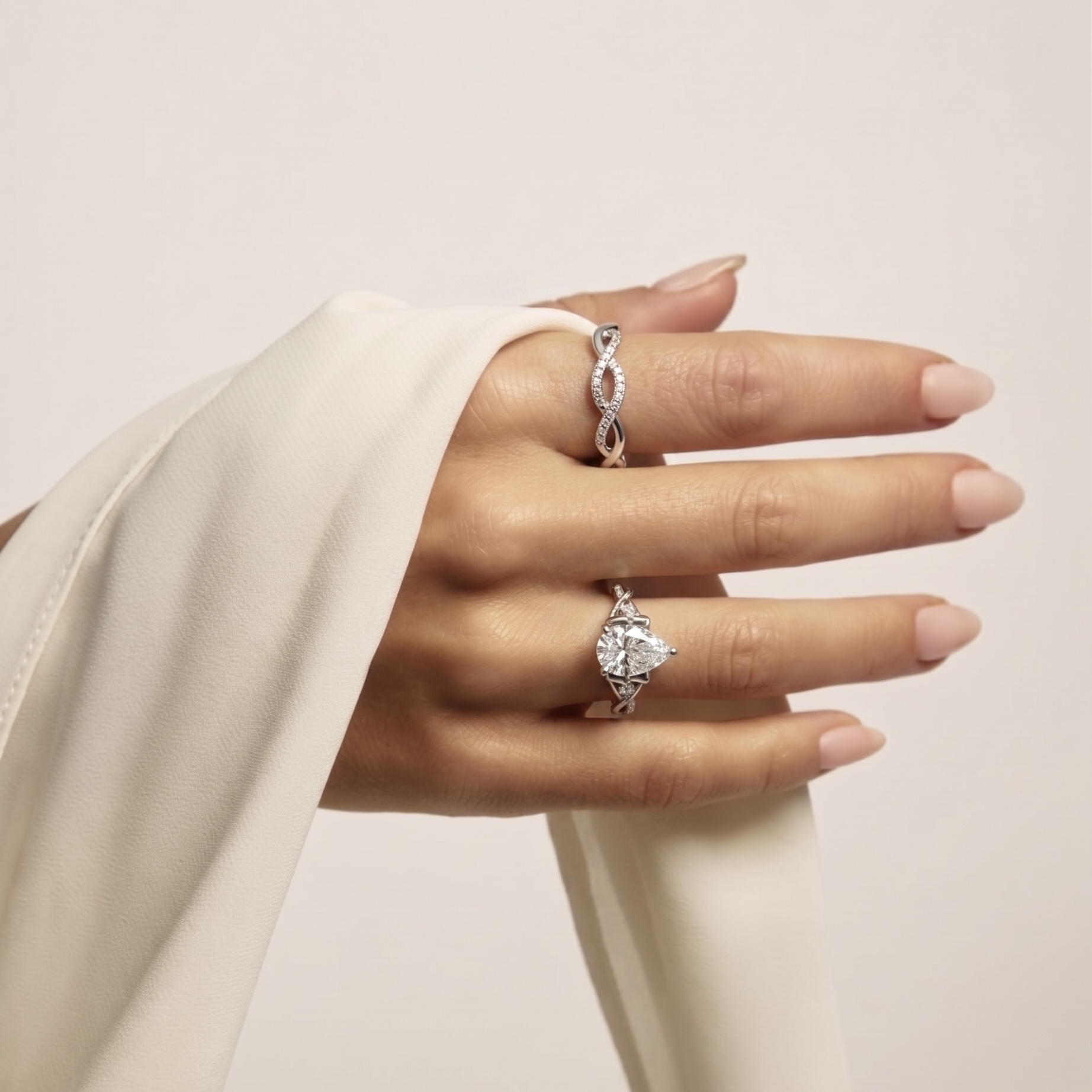
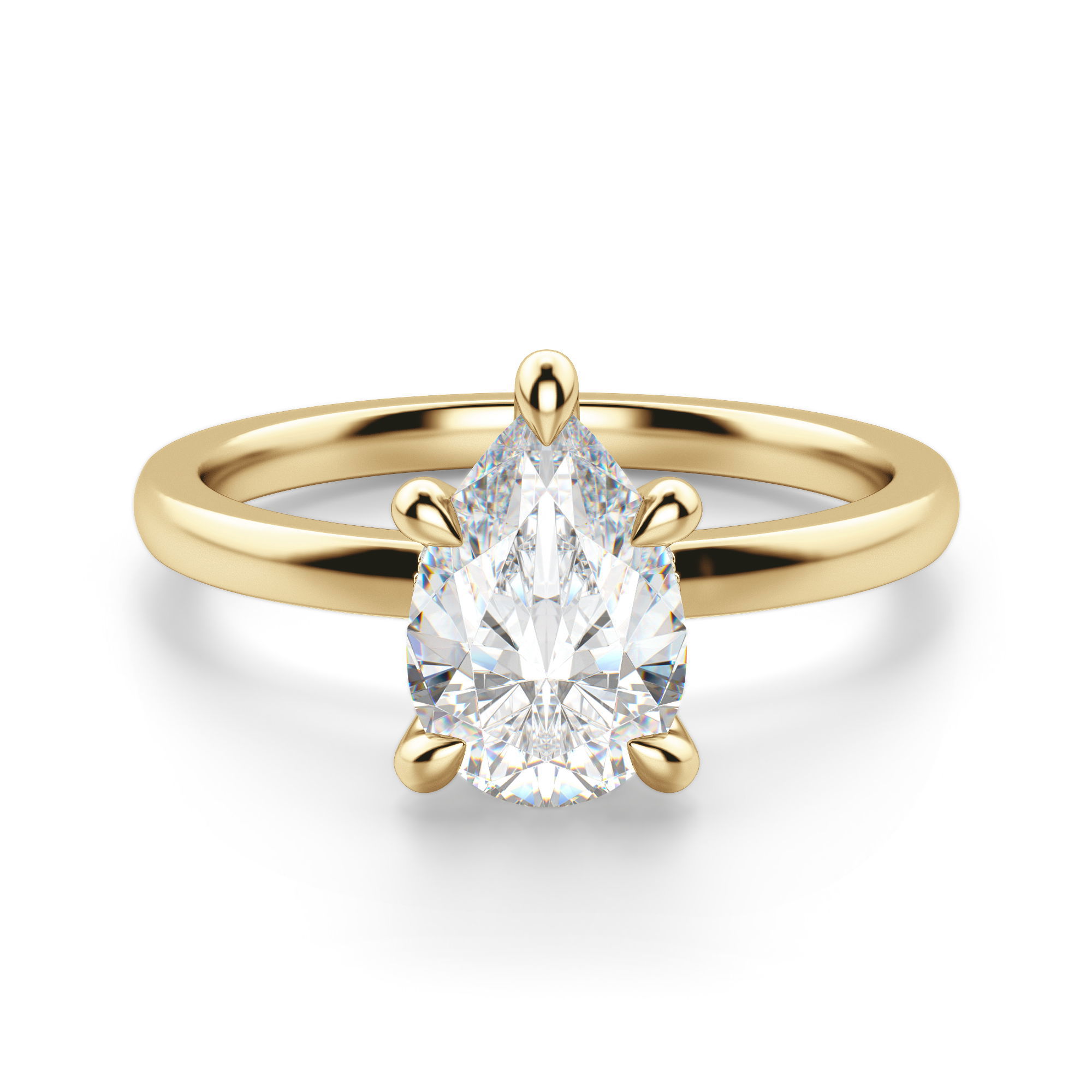
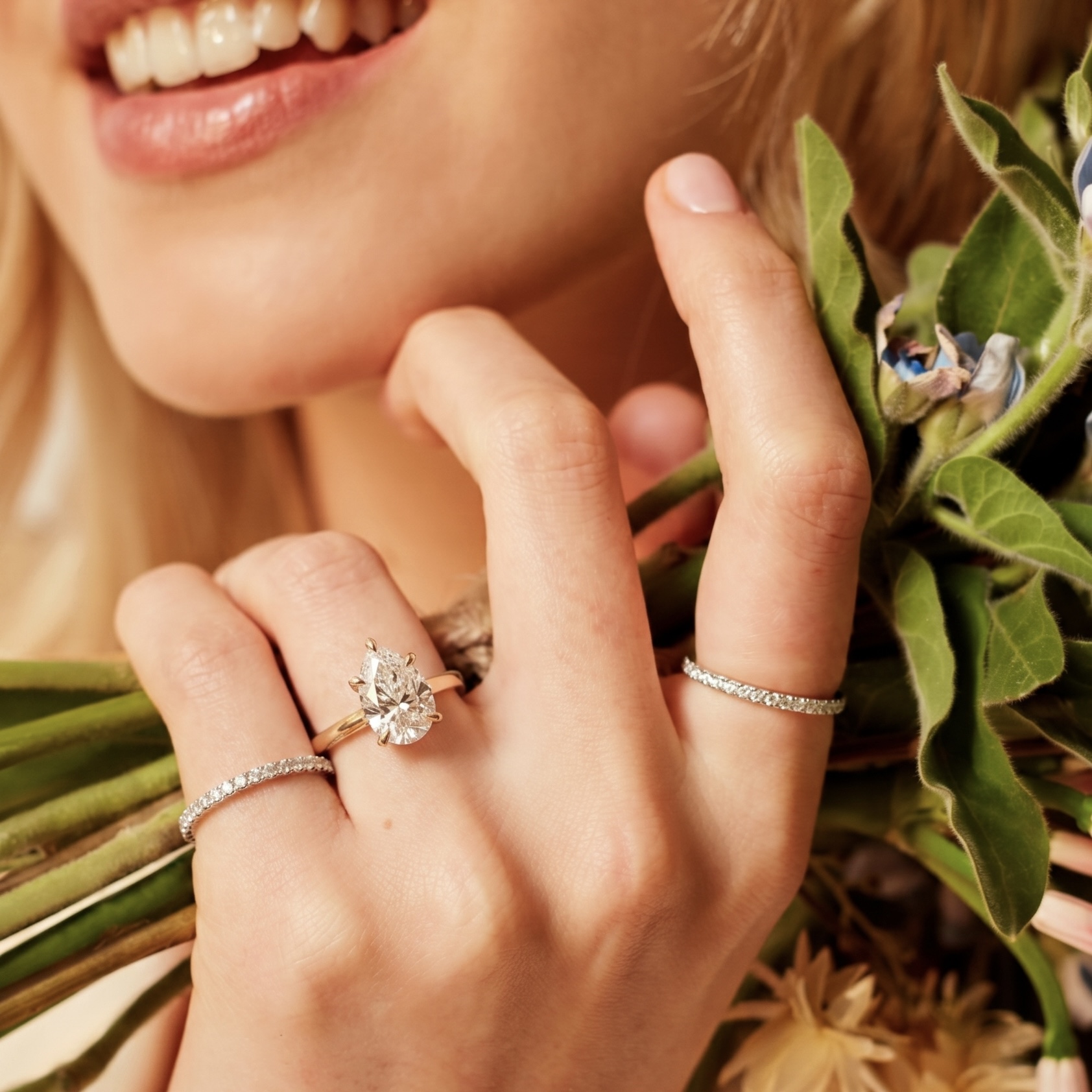
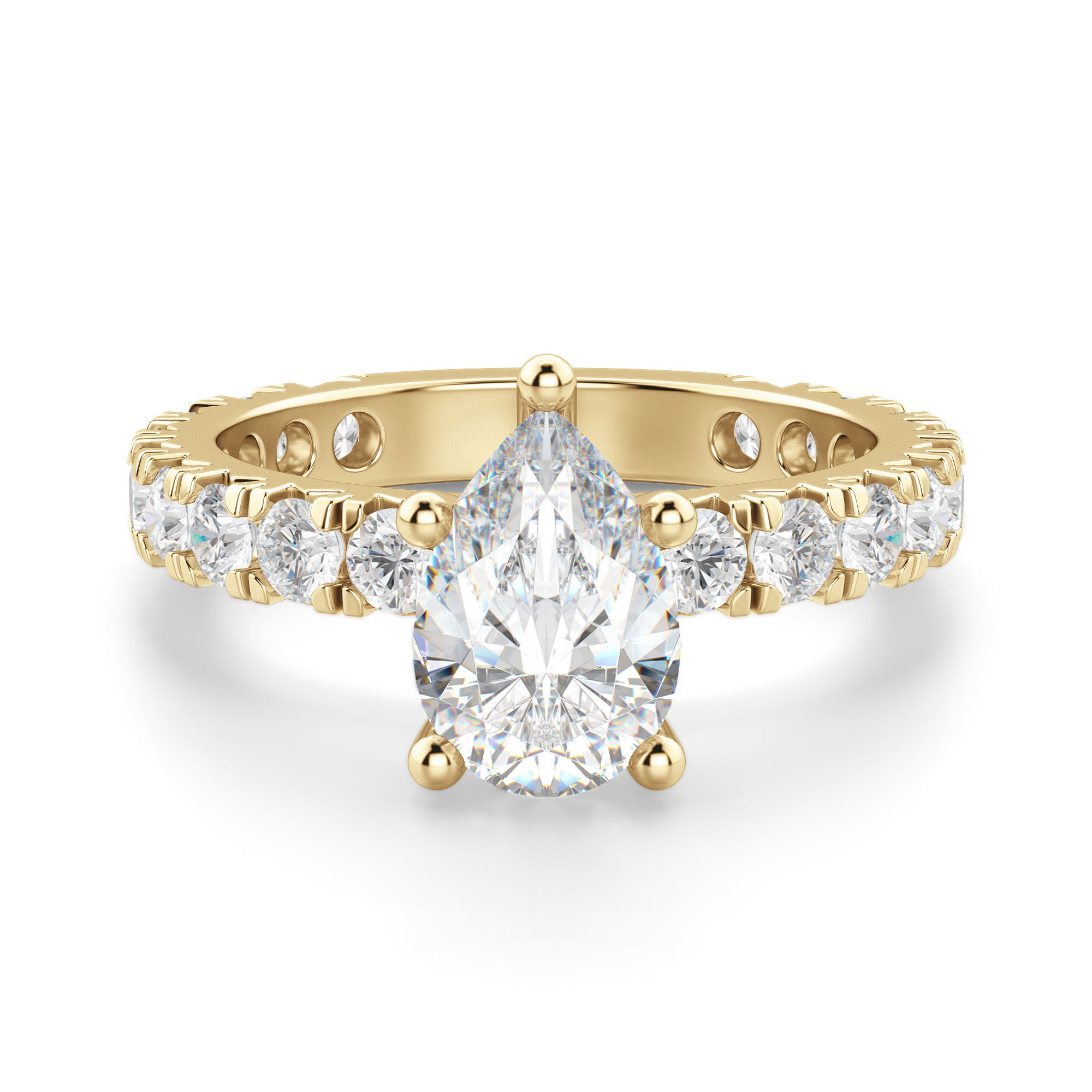
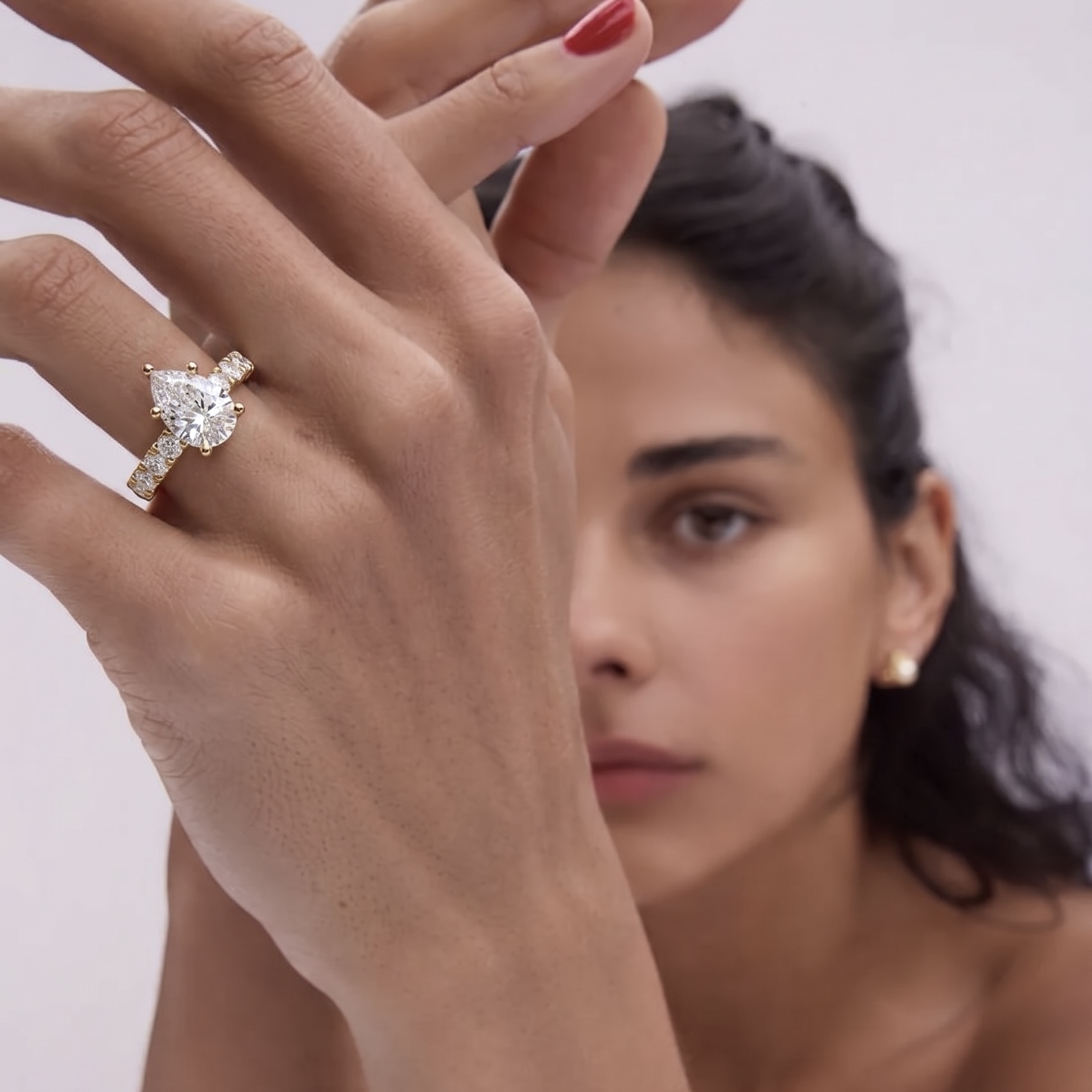
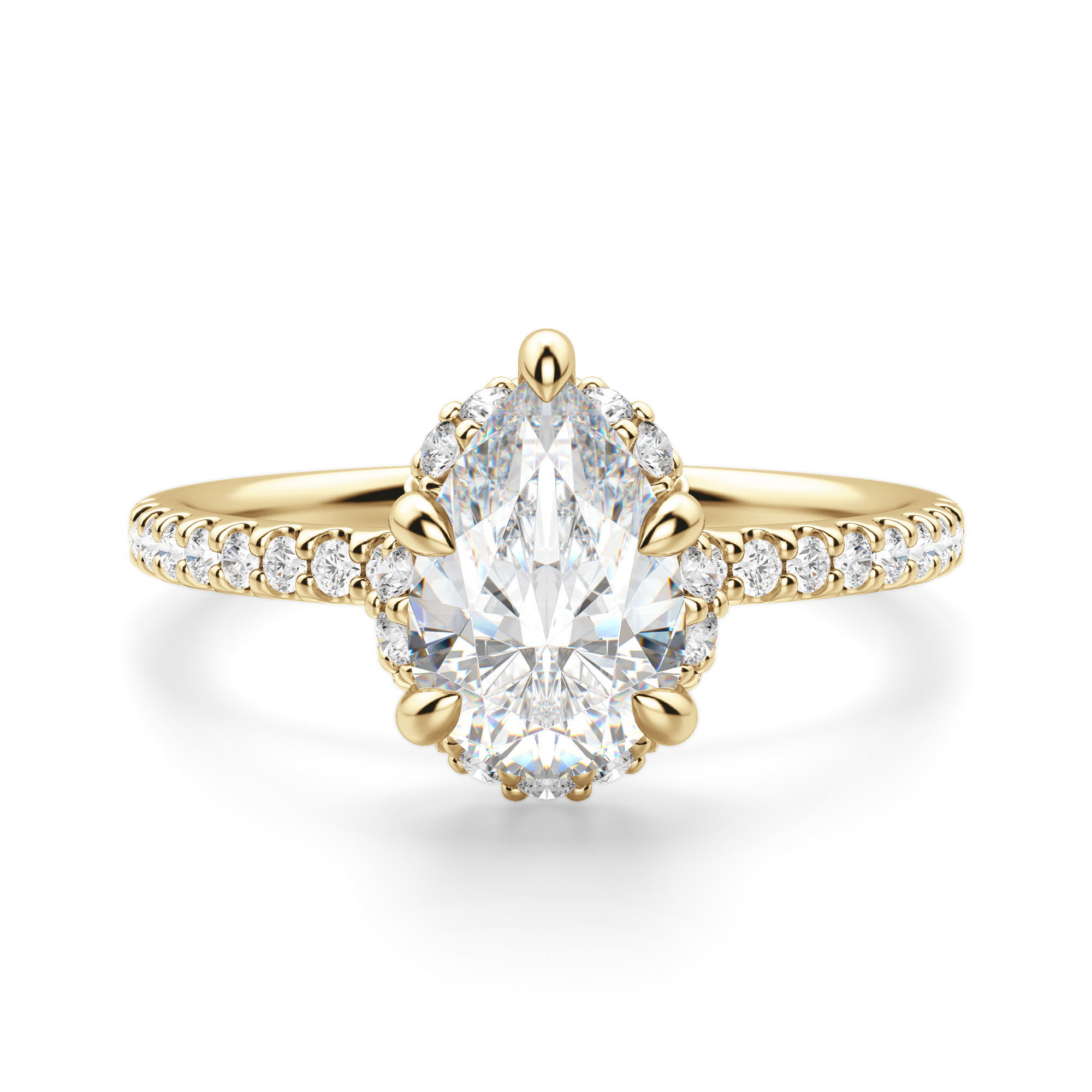
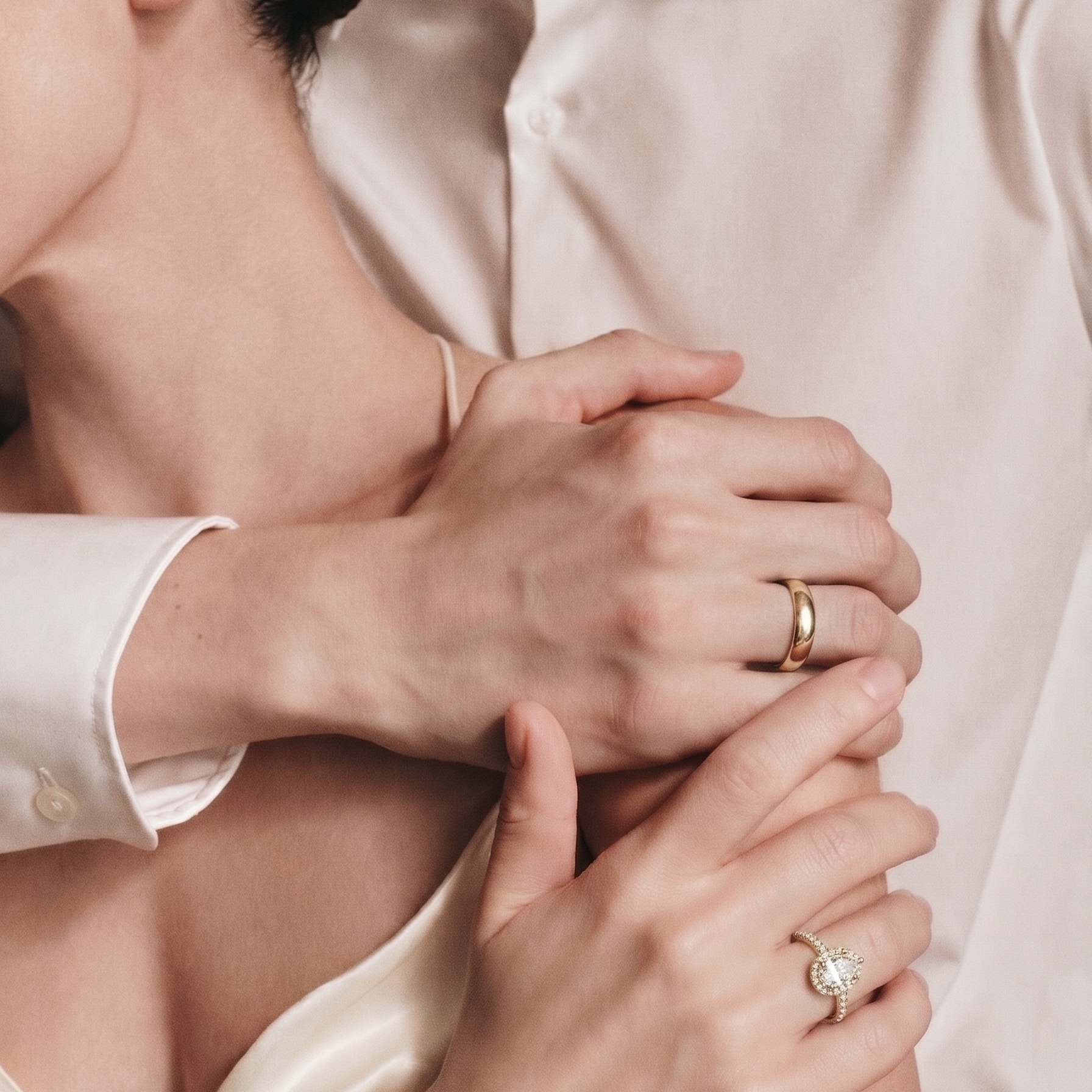
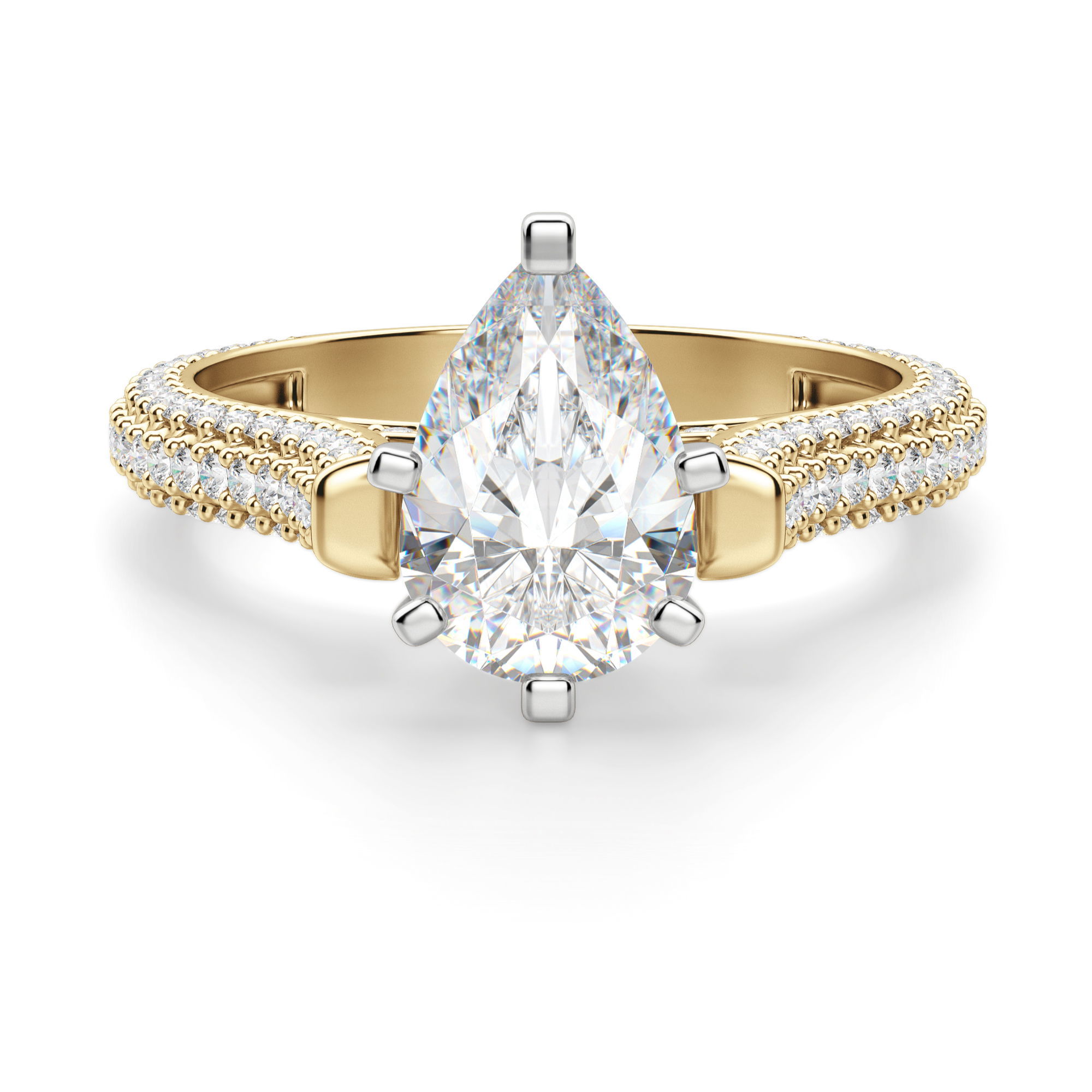
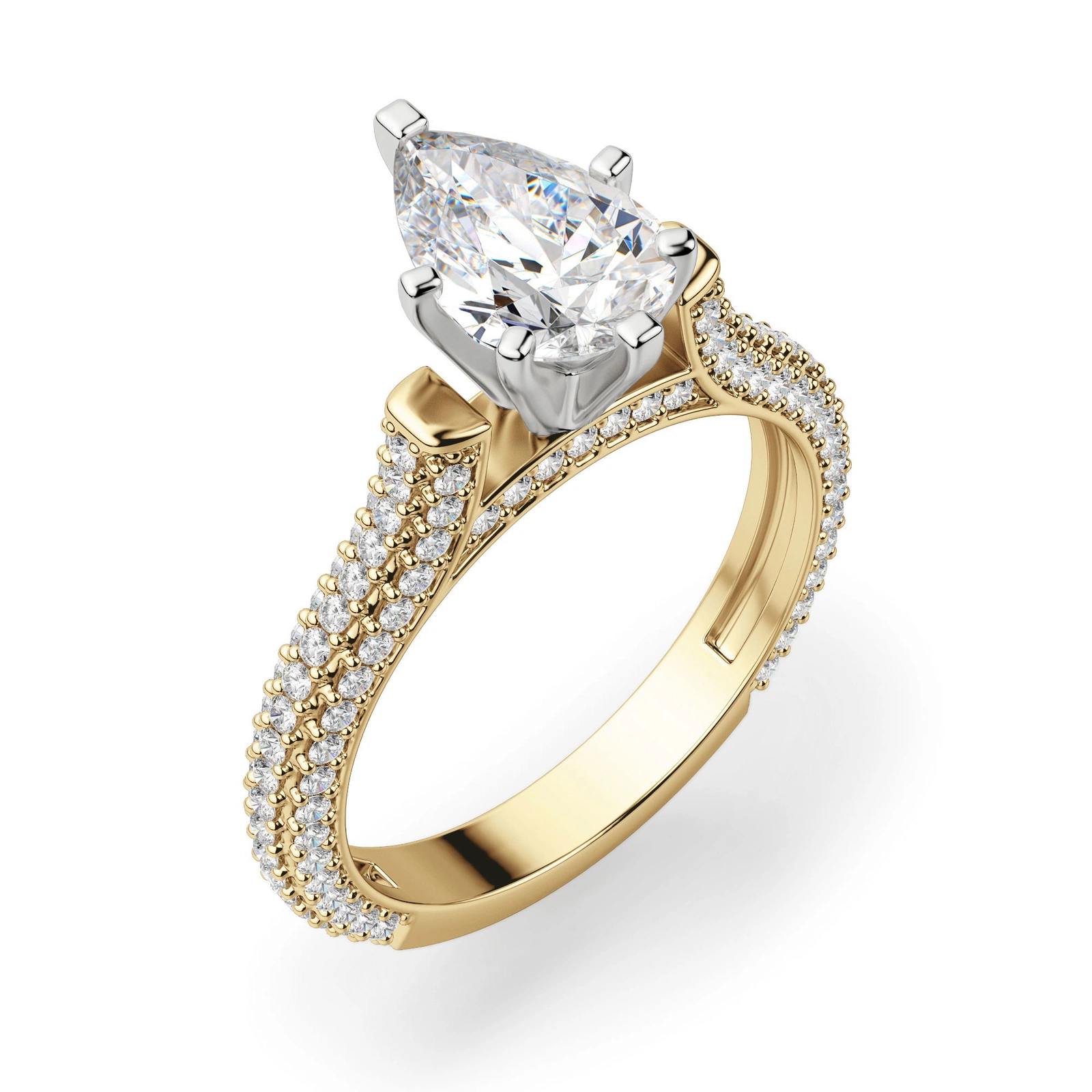
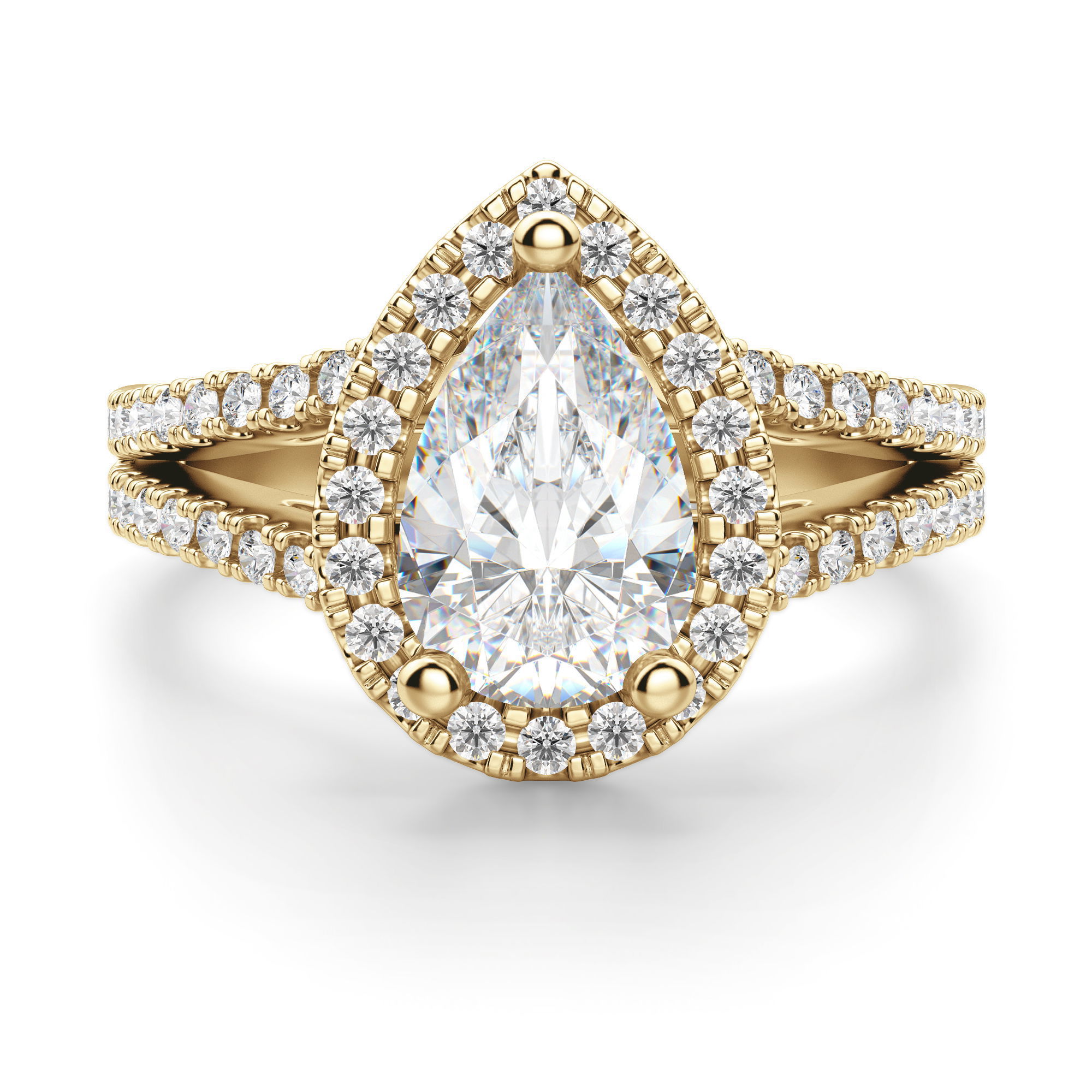
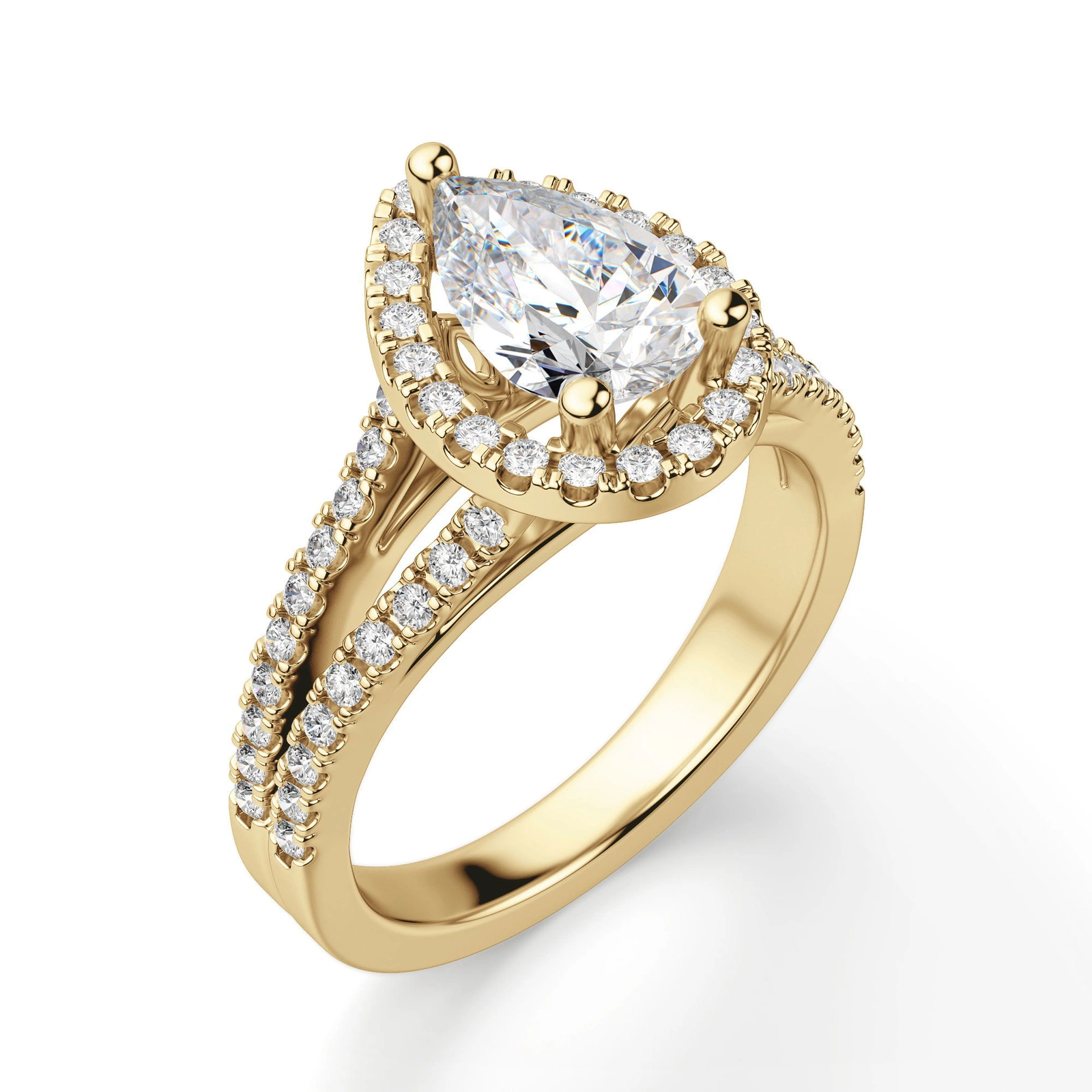
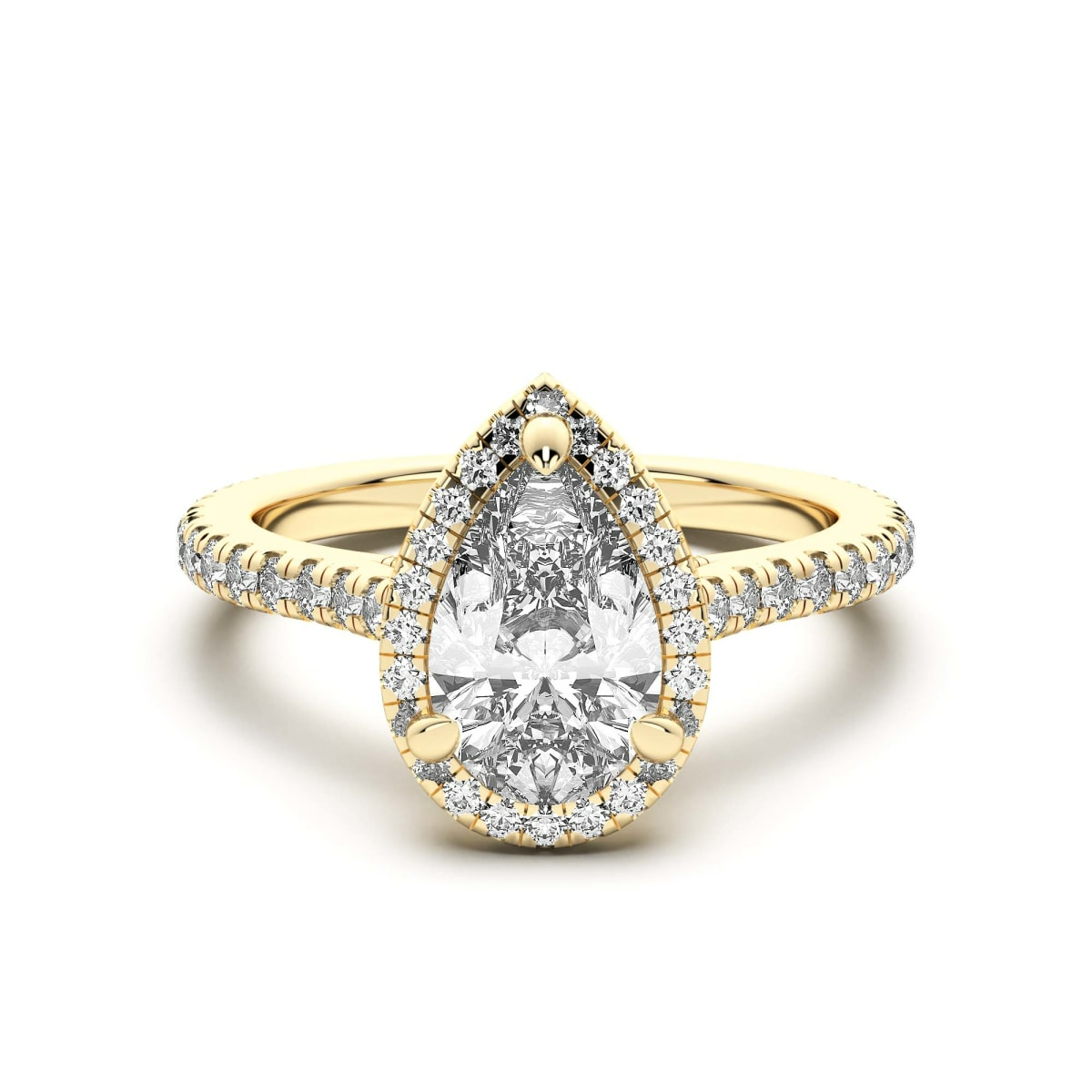
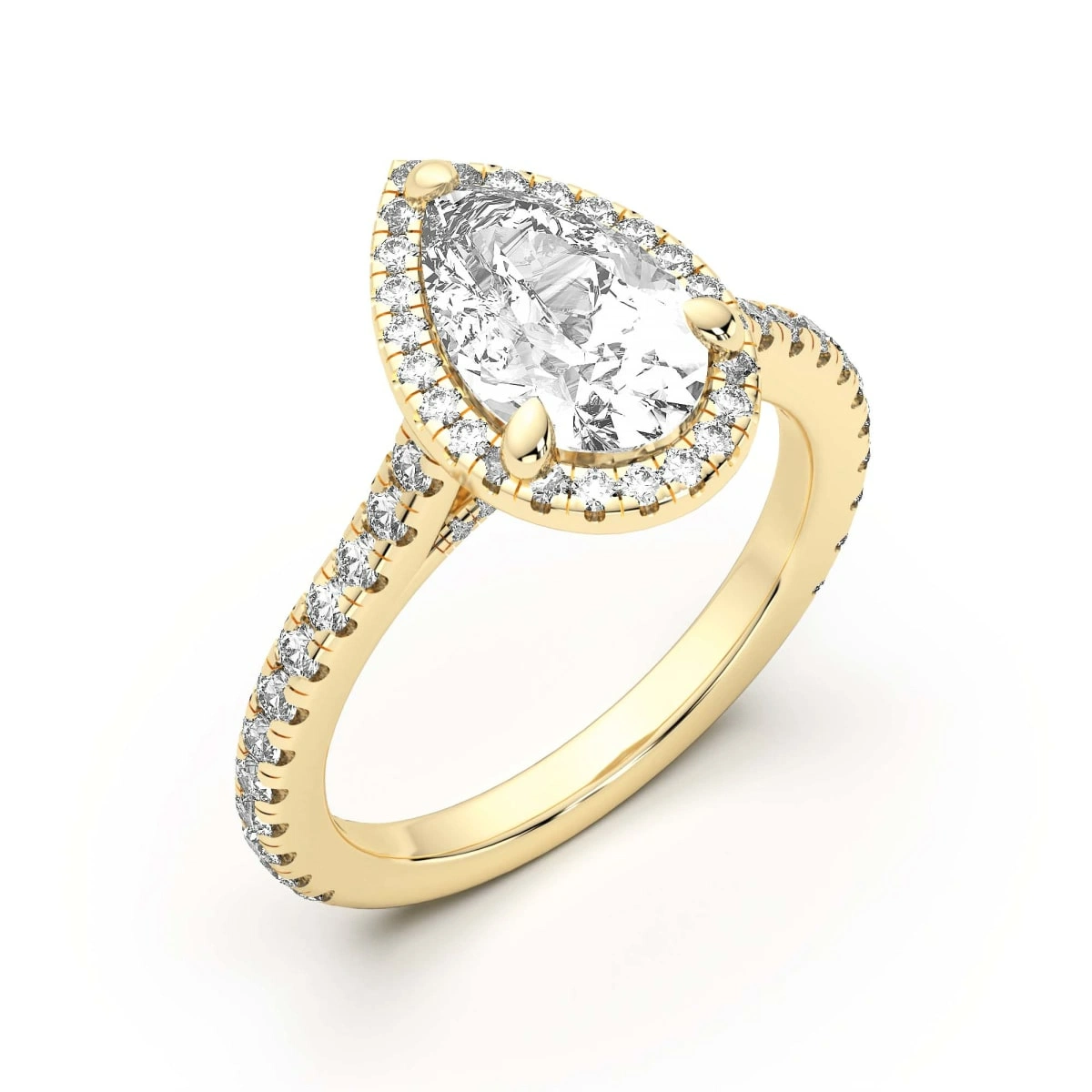
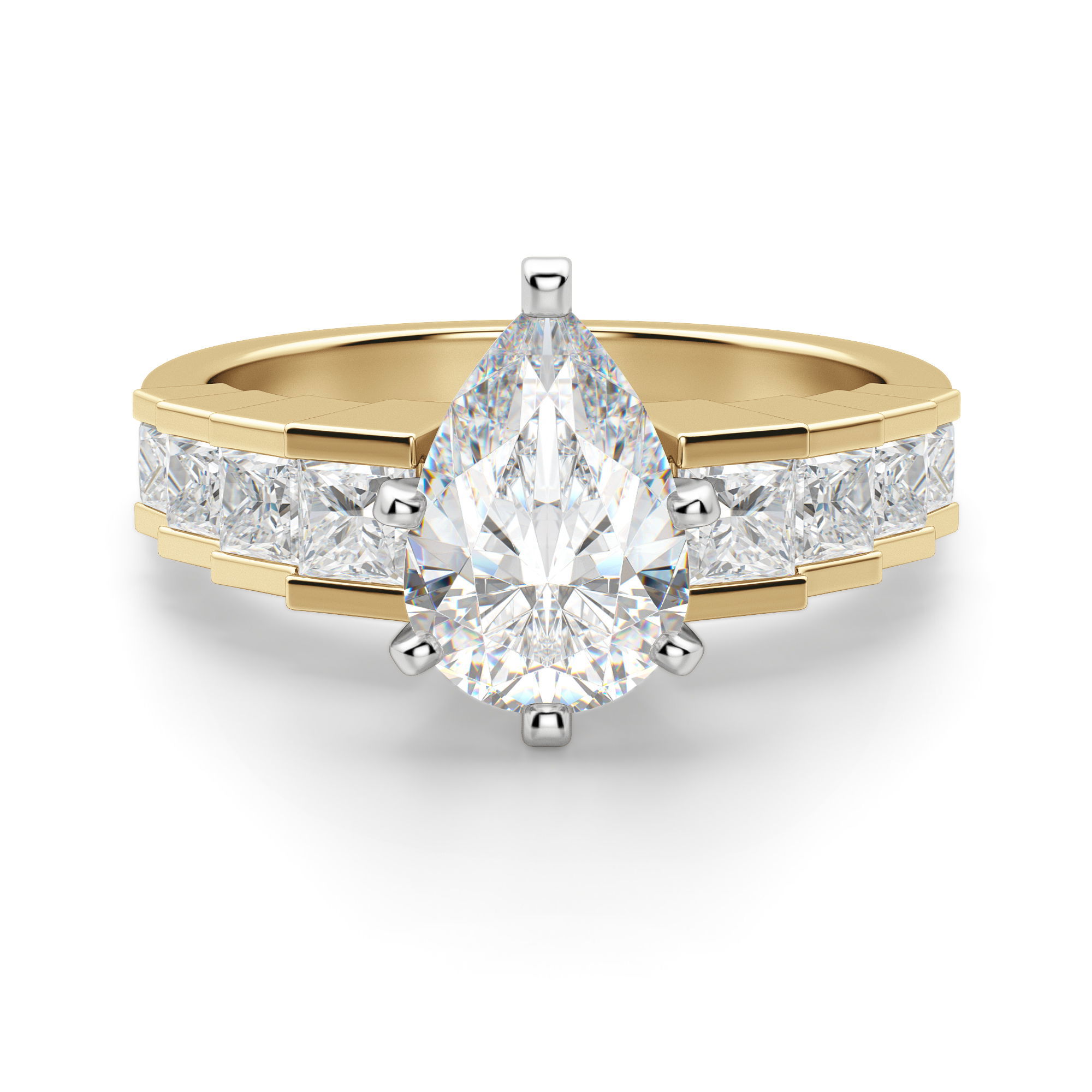
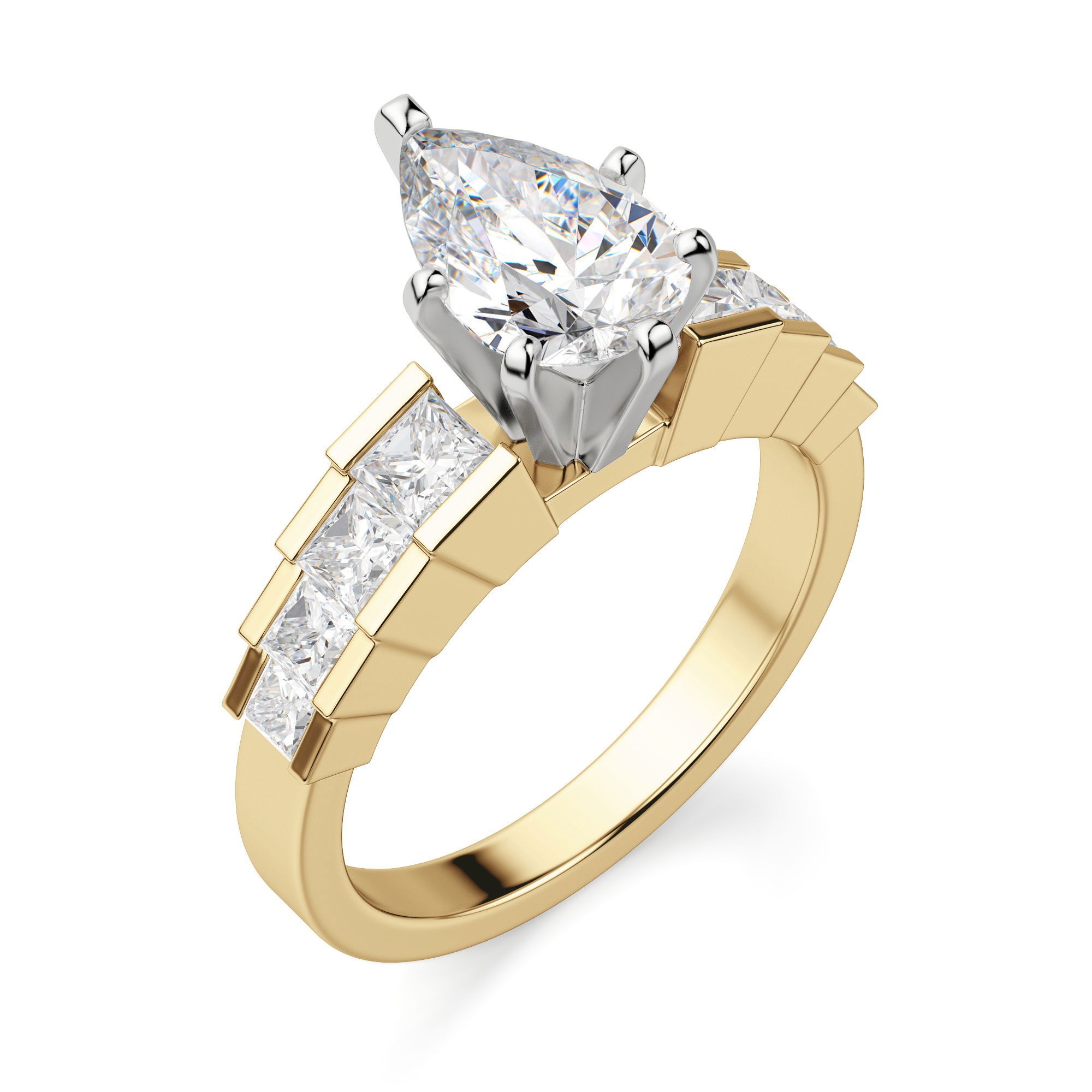
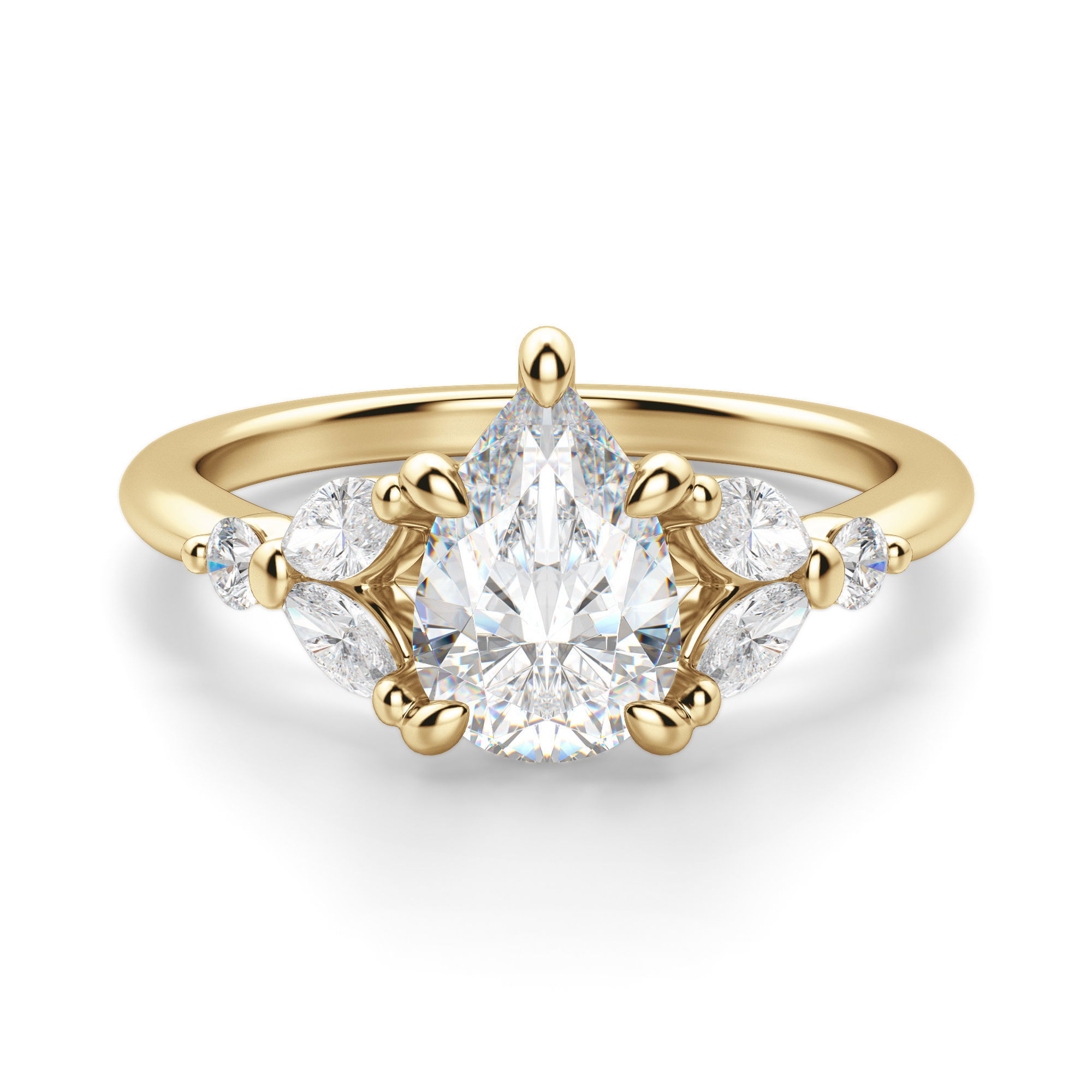
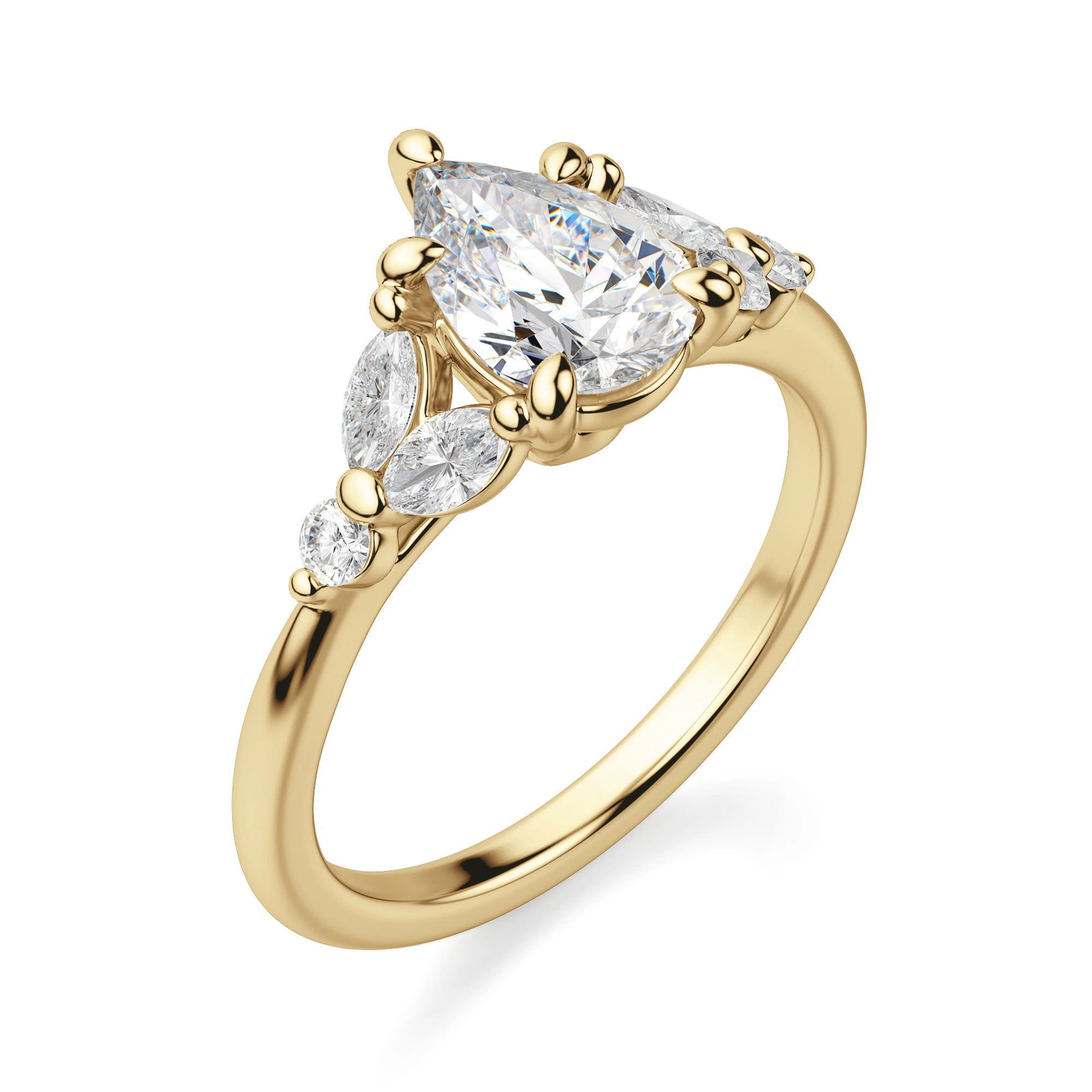
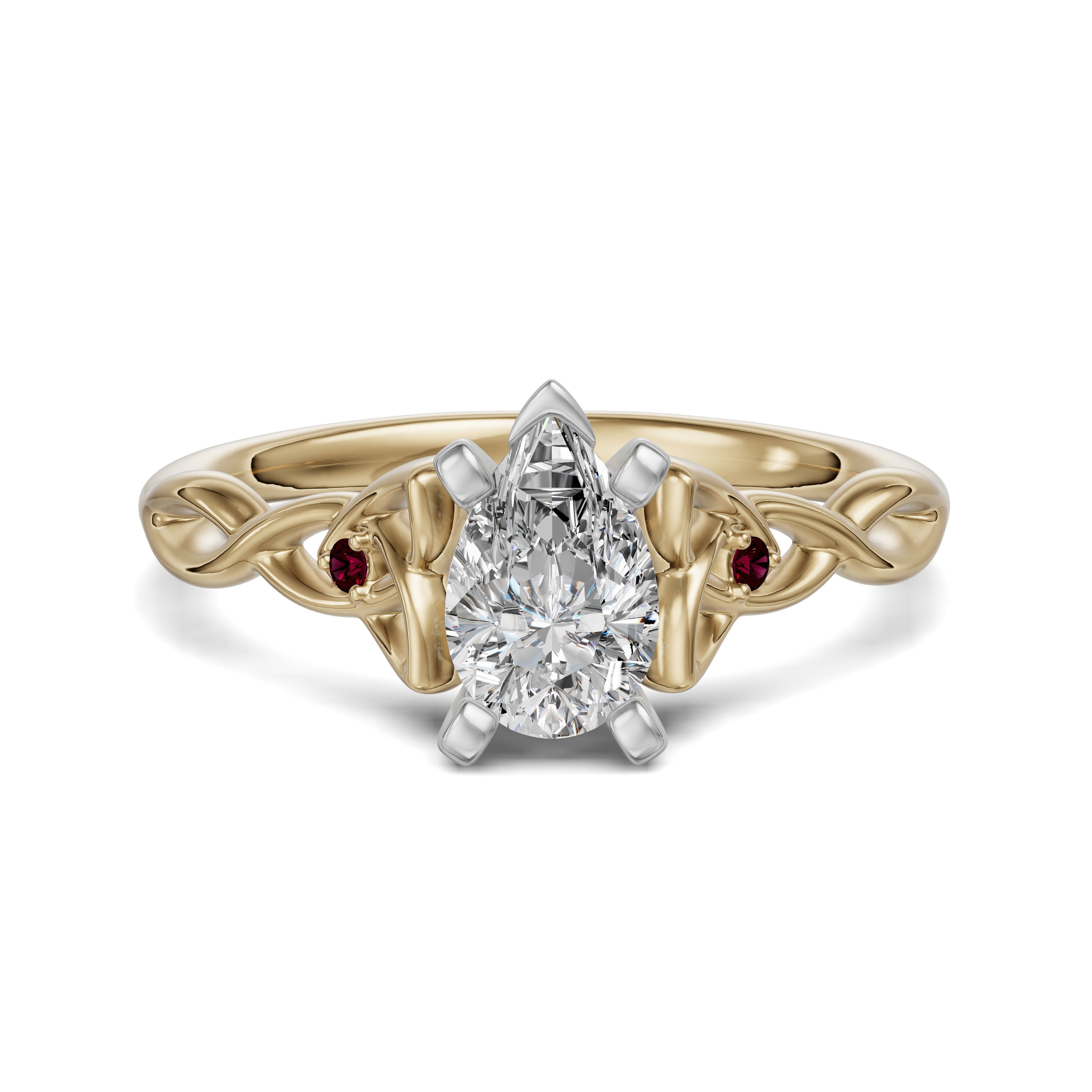
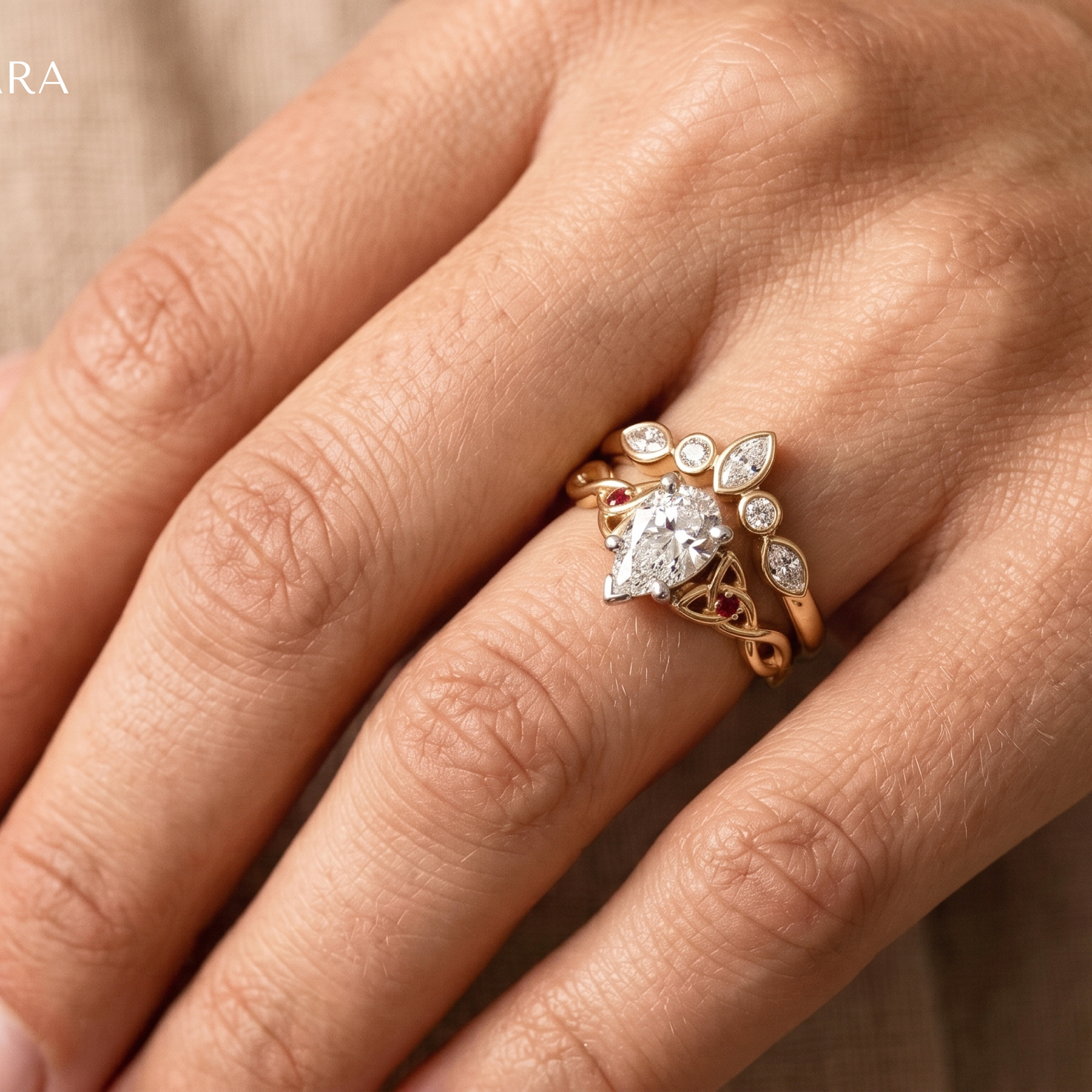
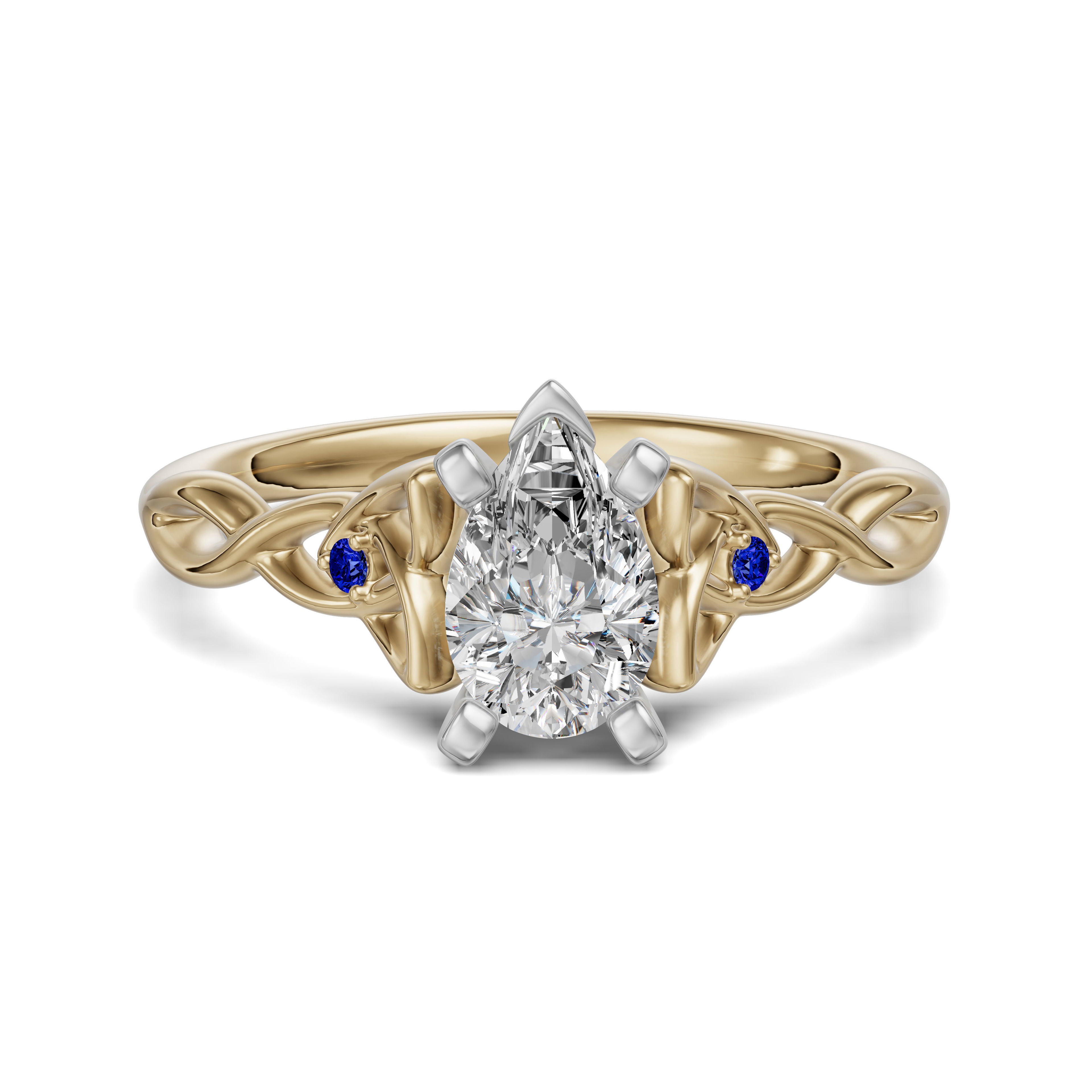
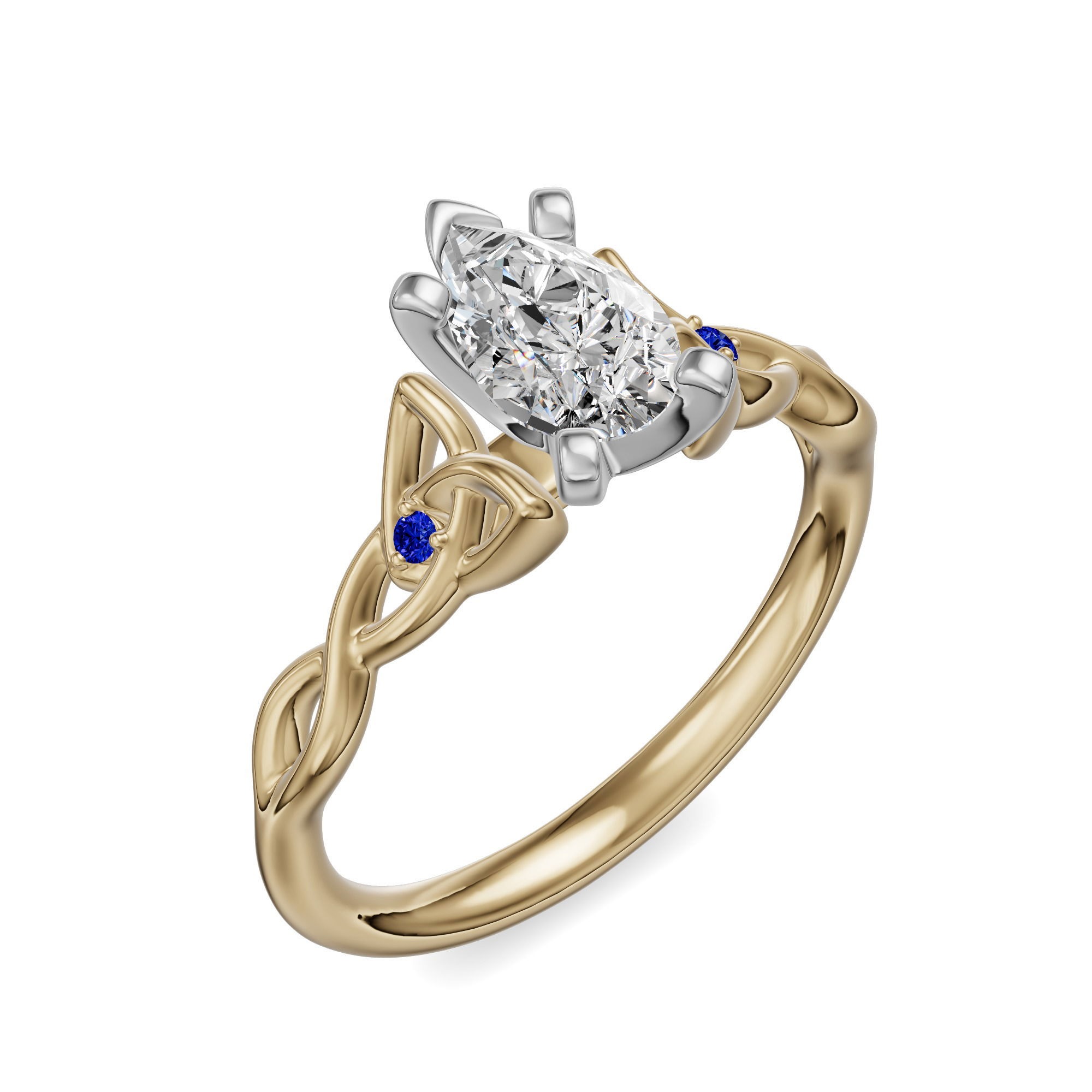
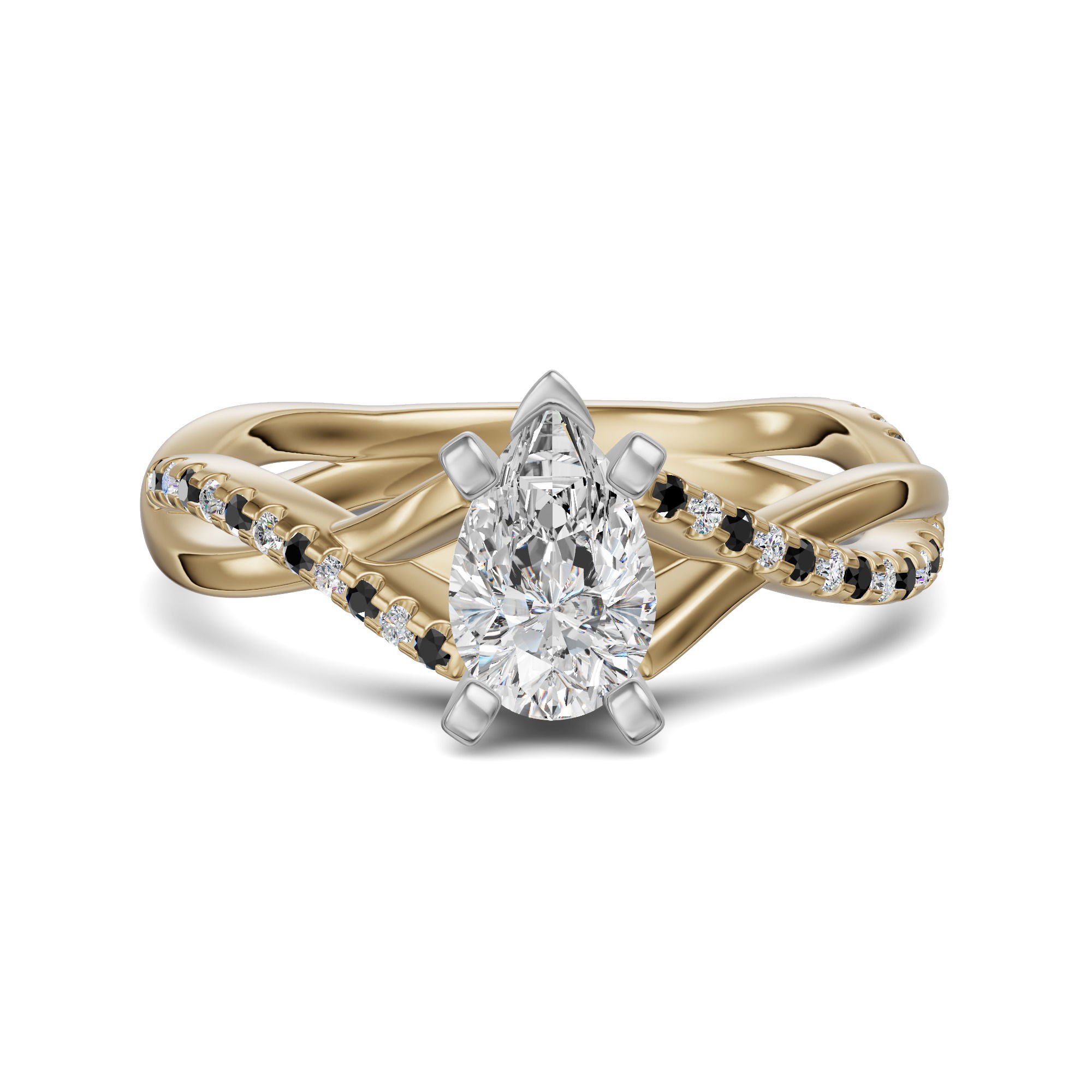
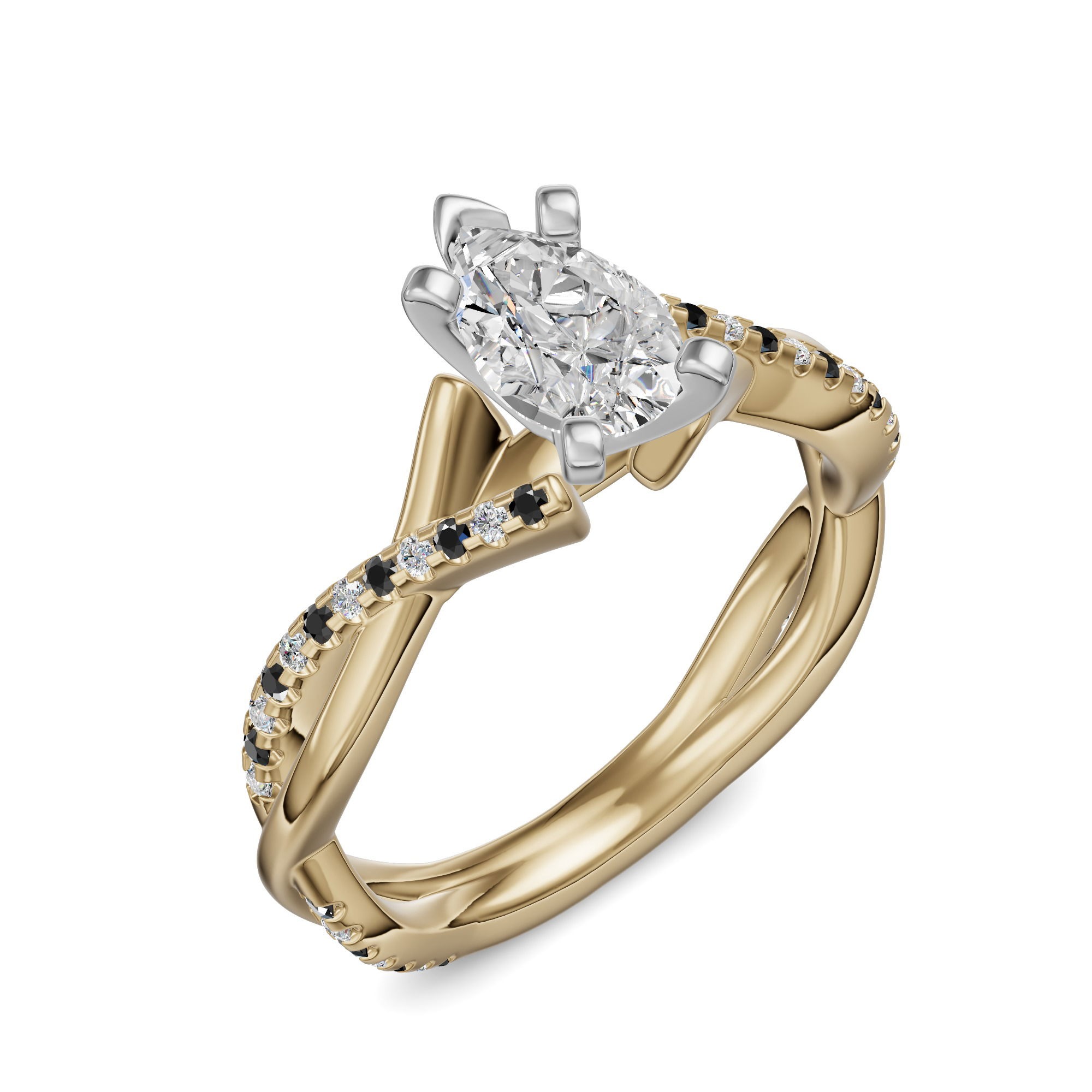
A pear-shaped diamond brings a different kind of presence to an engagement ring. Its rounded end gives the stone a fuller appearance, while the pointed tip draws the eye in a single direction. Set with the point facing down the finger, it creates a graceful line; turned towards the hand, it gives the ring a more unusual character. Here, pear-shaped diamonds are available in natural and laboratory-grown options, with central stone weights from 0.50 to 3.00 ct and a choice of 14K or 18K yellow, white or rose gold, or platinum. Every ring comes with an IGI certificate, so you can review a diamond's characteristics before you choose.
Why Pear-Shaped Diamonds Stand Out
A pear-shaped diamond suits anyone who wants a ring that stands out a little, without moving too far from the classics. It has the same brilliance as a round diamond, but its tapered shape draws the eye toward the fingertip and makes the hand look longer. That distinctive point is also its most exposed part, so pear cuts are almost always set with a V-shaped prong or a protective tip to guard against everyday chipping — worth checking before you buy. This same elongated shape can also make inclusions near the point or the centre more visible than they'd be in a round diamond, so clarity is worth a closer look with this cut.
Choosing Your Engagement Ring Style
Style affects how a ring looks and feels as much as the cut of the diamond does. Solitaire rings keep a single central diamond as the sole focus, with a clean, understated design. Accented rings add smaller diamonds around the centre stone or along the band for extra detail, while three-stone rings pair one central diamond with two smaller ones in a symmetrical setting. Halo rings surround the centre stone with smaller diamonds for a fuller, more eye-catching look; in a hidden halo, this detail sits beneath the stone and shows mainly from the side. Petite and minimalist designs favour a light, delicate impression, while vintage-inspired rings use engraved details and intricate shapes reminiscent of earlier jewellery eras.
Choosing Between Natural and Lab-Grown Diamonds
Once you've settled on a shape and style, there's still one more decision to make: where the diamond comes from. Natural diamonds formed underground over billions of years, while lab-grown diamonds are created in a matter of weeks, through a process that replicates those same conditions. Both are genuine diamonds, chemically and physically identical, and neither should be confused with simulants like cubic zirconia or moissanite, which only imitate a diamond's look without sharing its structure.
Some people are drawn to a natural diamond's origin. Others prefer that a lab-grown diamond requires no mining, leaving a smaller environmental footprint. Neither reflects a difference in quality; it simply comes down to which story matters more to you.
Diamond Quality and Certification
Diamond quality is measured by carat weight, colour, clarity, and cut grade. Carat weight refers to the diamond's size. Colour is graded on a scale from colourless to visibly tinted, and our diamonds are typically graded F/G. Clarity indicates the presence of natural inclusions; ours are typically VVS/VS clarity, meaning any inclusions are difficult to see without magnification. Cut determines how effectively the diamond reflects and returns light to create its brilliance. Every engagement ring in our collection is accompanied by an IGI certificate detailing these characteristics.
Related Categories: Oval Cut Engagement Rings, Princess Cut Engagement Rings, Cushion Cut Engagement Rings, Marquise Cut Engagement Rings, Round Cut Engagement Rings