
Engagement Ring: Which Hand to Wear It On and How to Choose

An engagement ring is one of the few pieces of jewellery you wear almost every day for years, so it is worth choosing with your head as well as your heart. Two questions come up straight away: which hand and which finger it goes on, and how to choose the right one when the choice seems endless.
In this article we explain where the engagement ring goes and where the wedding band goes (and why there is no single rule), and then walk through five decisions when choosing a ring, in the order that makes them easiest. You will find a clear table, a helper for choosing between a ready-made ring and a custom one, and a few tips on size and timing.
Engagement ring: which hand and which finger
The most common answer is simple: the engagement ring is worn on the left hand, on the ring finger, which is the fourth finger if you count from the thumb. The custom comes from an old idea of a vein running from this finger straight to the heart. Anatomically that is not true, but the romantic legend has survived for centuries and so has the habit.
The second question, which people search for even more often, is trickier: which hand does the wedding band go on? In our tradition the wedding band is worn on the right hand, also on the ring finger, so a wedding band on the right hand is perfectly common here. It is not a rule, though: in English-speaking countries both rings are worn on the left hand, and in the Orthodox tradition both are worn on the right. Many couples choose their own arrangement after the wedding, depending on comfort and on how the rings sit together. You will find a more detailed look at the traditions in the article Which hand do an engagement ring and a wedding ring go on.
| Situation | Hand | Finger | Note |
|---|---|---|---|
| Engagement ring (our tradition) | Left | Ring finger | Worn from the engagement, and most people keep wearing it after the wedding |
| Wedding band (our tradition) | Right | Ring finger | Worn from the wedding; a wedding band on the right hand is common here |
| After the wedding, both rings together | Left, or one on each hand | Ring finger | Depends on comfort and on how the rings sit together |
| English-speaking tradition | Left (both rings) | Ring finger | The wedding band sits closer to the palm, the engagement ring above it |
| Orthodox tradition | Right (both rings) | Ring finger | Engagement ring and wedding band on one hand |
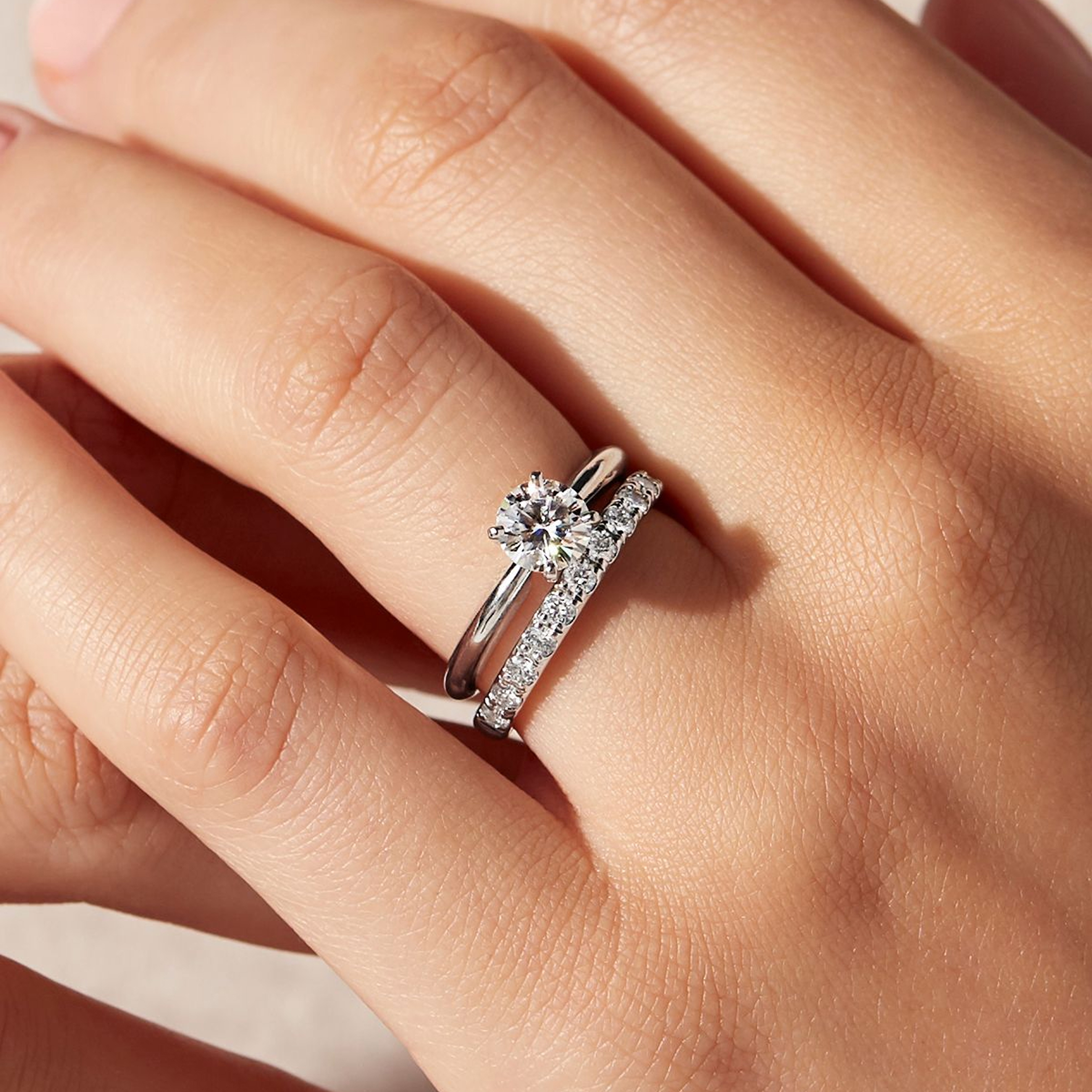
Which finger does the wedding band go on, and how to wear them together
The wedding band goes on the ring finger, just like the engagement ring. If you plan to wear them on one hand, think about it when you choose the engagement ring: a high-set stone or a wide setting may not sit neatly against a plain band, so it is worth trying the rings on together. You will find an overview in the wedding bands section.
If the wedding band is still a long way off, nothing is lost. Choose the engagement ring first and add the band when the time comes.
Good to know: you can choose the hand and finger yourself. One practical rule matters: finger size differs between hands and between fingers (the dominant hand is usually a little larger), so always measure for the finger the ring will actually be worn on. And watch the words: in Slovak the wedding band is called „obrúčka“, but in everyday speech people sometimes use it for the engagement ring too.
How to choose an engagement ring: five decisions in the right order
An engagement ring is a puzzle made of several decisions. If you try to solve them all at once, you easily get lost; if you go through them in order, each next one narrows down. If you want to go deeper, see also The best guide to choosing the perfect engagement ring.
- Budget and origin of the stone: at Omara you will find only diamonds with an independent GIA or IGI certificate, both natural and lab-grown. Lab-grown diamonds are approximately 60 to 80% cheaper than natural diamonds of comparable quality, so for the same budget you can have a larger or higher-quality stone. To be honest about the other side: if you ever sell, you will typically get back approximately 20 to 40% of the purchase price with lab-grown diamonds and approximately 40 to 60% with natural ones, so do not buy a ring as an investment.
- Shape of the stone: round is the classic, oval and marquise look larger at the same weight and visually lengthen the finger, pear and princess have a more distinctive character. Shape is the hardest thing to change later, so choose it by what she wears and what would suit her.
- Metal: yellow gold looks warm and classic, white gold cooler and more modern, rose gold soft and romantic; platinum is naturally white, but heavier and more expensive. Gold purity (14k or 18k) means approximately 58.5% or 75% gold. If you like a cool tone, take a look at engagement rings in white gold.
- Setting and style: a solitaire (one stone) is timeless, a halo surrounds it with smaller stones and adds sparkle, and three stones are often read as past, present and future. A prong setting lets more light into the stone, a bezel protects it better from knocks. For everyday wear, a setting that does not catch on jumpers is more practical.
- Size: this is the decision that matters most when it is a surprise, so we give it a paragraph of its own below.
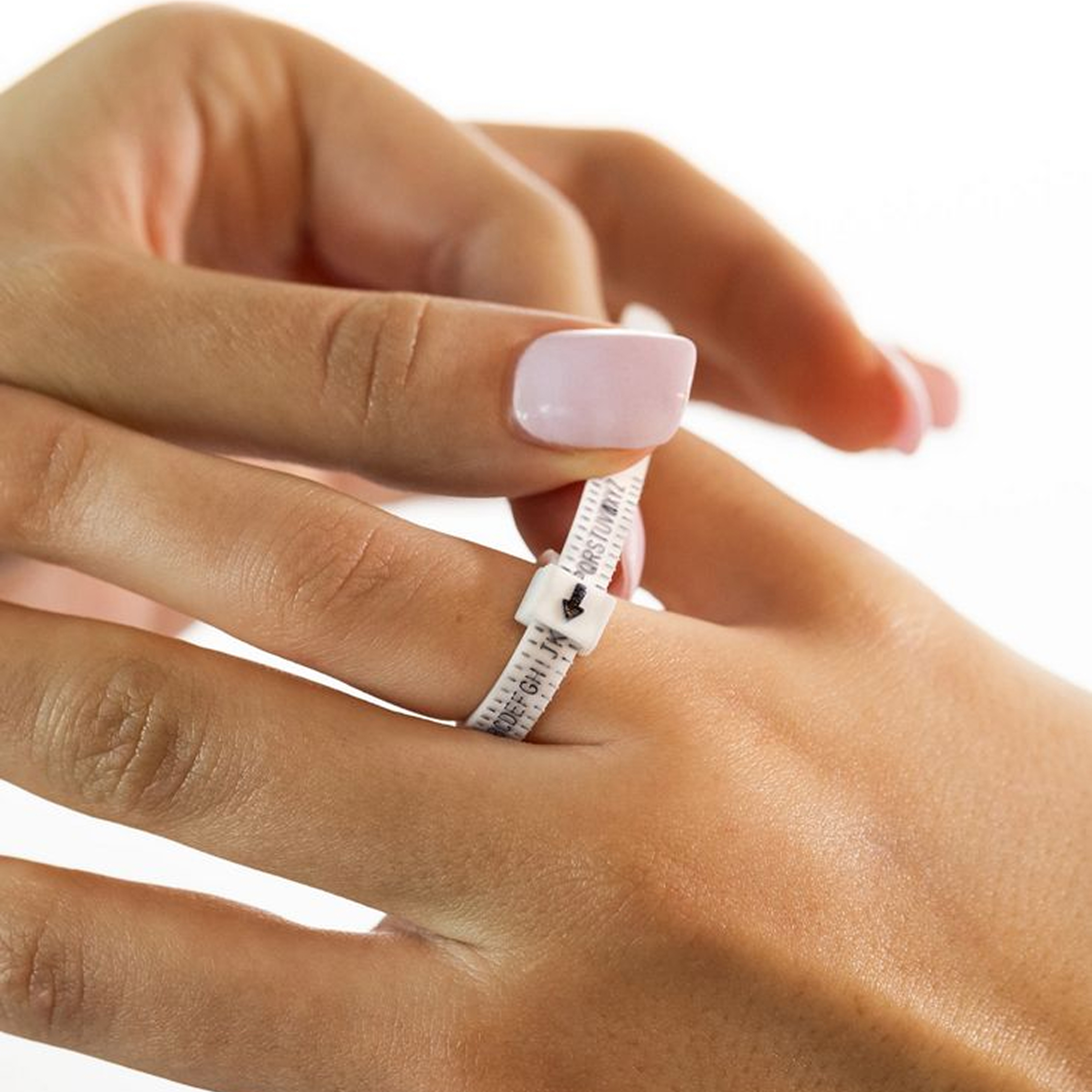
Ring size: how to avoid getting it wrong
You will find discreet ways of measuring and a size table on the page Ring sizes and resizing. Omara offers resizing even after purchase, so if you do not hit the size exactly, it is not the end of the world.
When in doubt it is usually safer to go for a slightly larger size: making a ring smaller is generally easier than making it larger, especially with stones all the way round. If you are not sure which style is easier to resize, ask before you order.
Ready-made or custom ring: which to choose
Engagement rings are available ready-made, with fast shipping, and custom. A custom ring usually costs more and takes longer, but lets you fine-tune exactly what you are looking for. The decision is not about quality but about what you need more: certainty and time, or individuality.
Choose a ready-made ring if:
- You have a fixed date, for example a proposal in a few weeks
- You want to see exactly what you will get
- Your budget is fixed
- You are choosing for the first time and want certainty
Choose a custom ring if:
- You have a clear idea that you cannot find in the range
- The stone or setting should carry a personal meaning
- A higher price and a longer wait do not bother you
- You want to design the ring and the band as a pair
If you are hesitating, you do not have to decide alone: through a virtual consultation you can go through shape, metal and budget with us before you start an order.
When to buy: proposing at Christmas and in winter
Proposals are often planned for the end of the year, for Christmas (24 December) or New Year’s Eve (31 December). If you are aiming for one of those days, do not leave the choice for the last weeks: a ready-made ring is the faster route than a custom one, and resizing also needs time. Check the current delivery times on the Delivery page.
Our honest tip: do not choose by the biggest carat weight. A ring that fits her, that she will wear every day and that can be adjusted will please her more than the biggest stone that catches on a jumper. When balancing the budget, weigh stone size against cut and clarity, and remember that a GIA or IGI certificate matters more than a few hundredths of a carat extra.
Summary: start with the hand, finish with the size
In our tradition the engagement ring is worn on the left hand and the wedding band on the right, but both rings can be worn differently. When choosing, go in order: budget and origin of the stone, shape, metal, setting and finally size. And if you need a safety net, remember that the size can be adjusted after purchase.
Engagement rings collection – browse engagement rings in different shapes, metals and settings and choose the one that will suit her and your budget.
Frequently asked questions
Next article
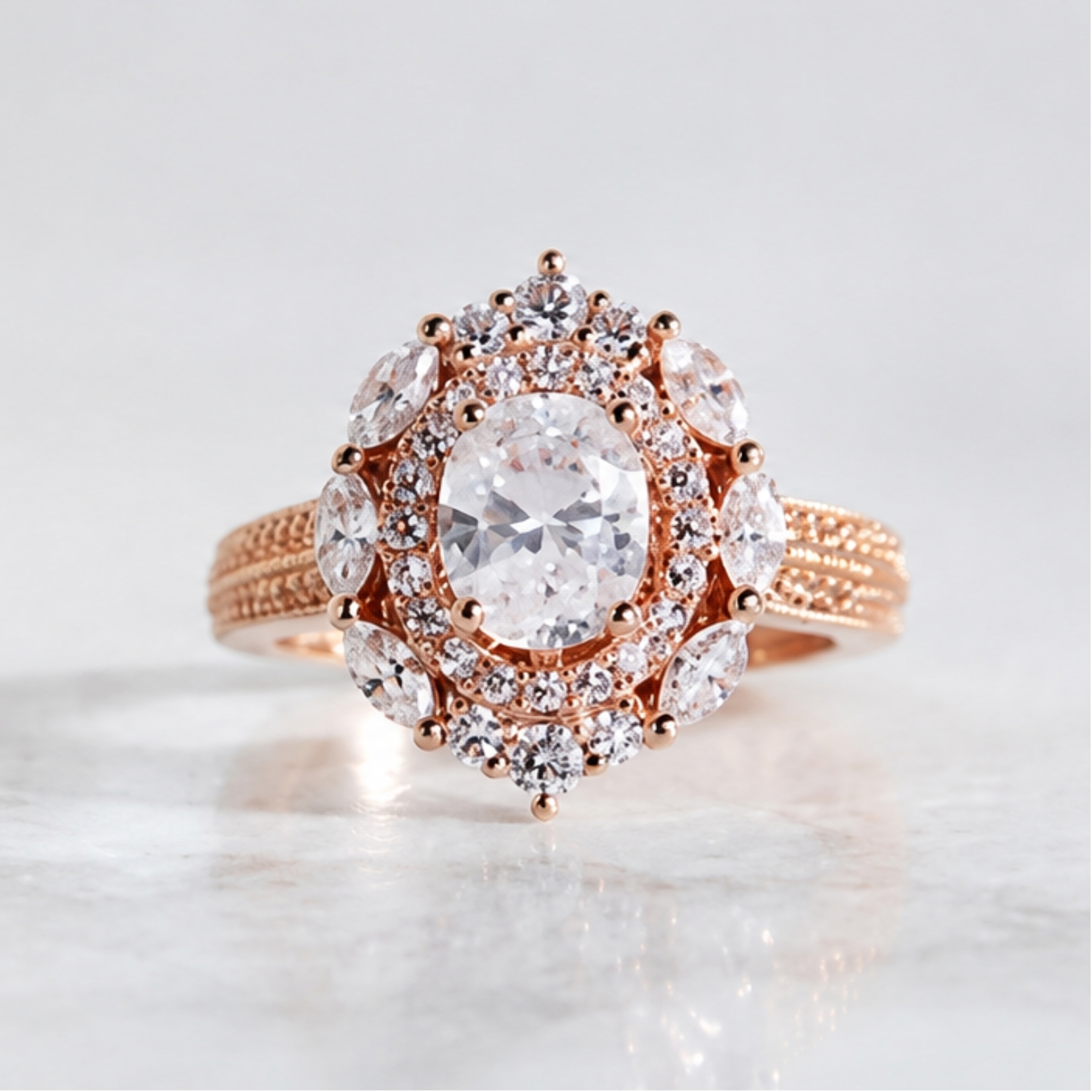
How Much Should an Engagement Ring Cost in 2026?
Stressed about the rule that an engagement ring should cost two to three months' salary? Forget it—it's just a marketing myth. In this article, we reveal what actually affects the price of a ring and how lab-grown diamonds can help you afford a stunning piece tailored to your budget, entirely debt-free.