
How Much Should an Engagement Ring Cost in 2026?
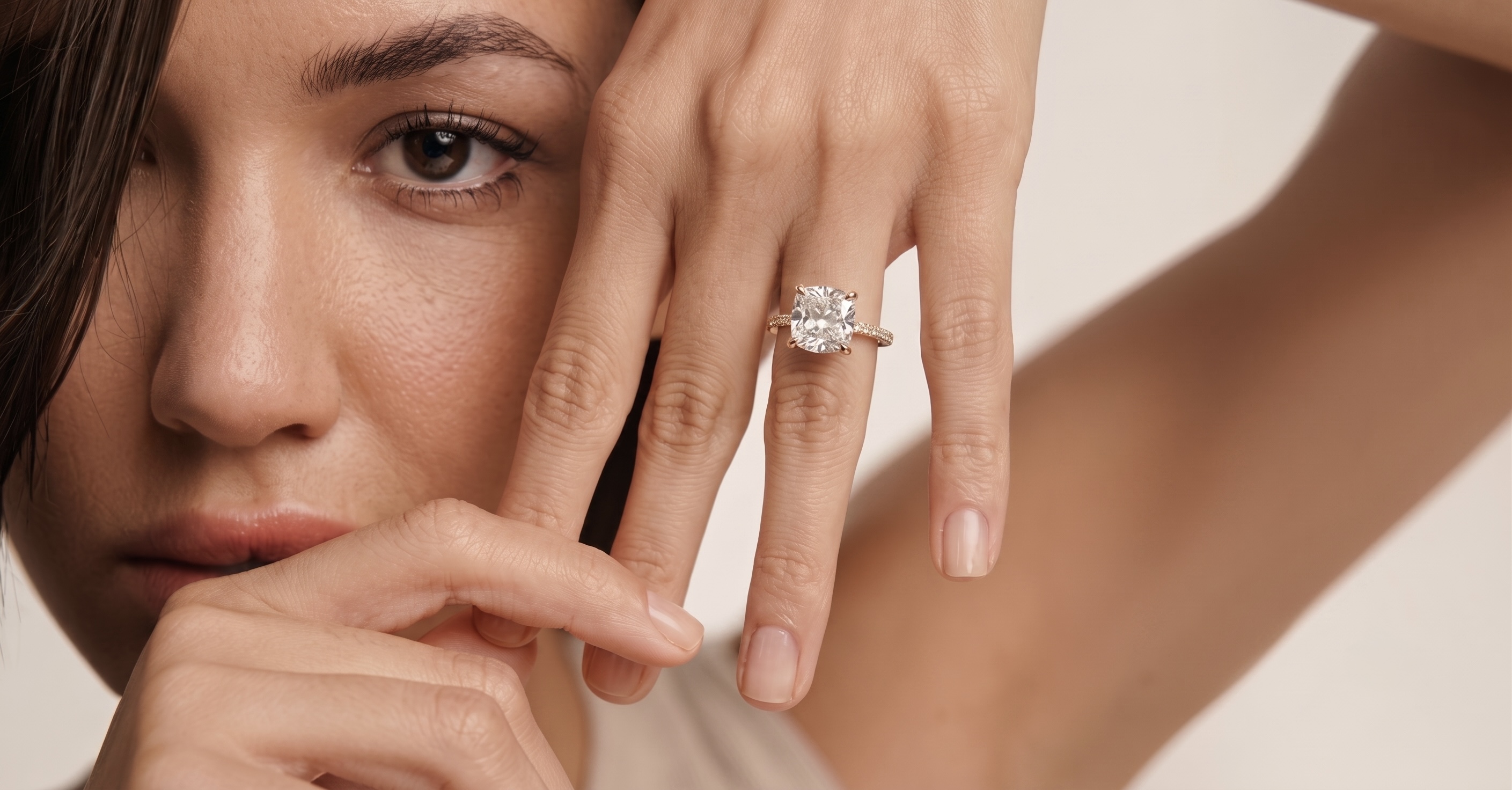
"How much should I spend on an engagement ring?" is one of the most stressful questions in the lead-up to a proposal. You've probably heard the rule about two or three months' salary — and that's likely exactly why your budget feels out of reach.
Here's the good news: you can safely ignore that rule. In this article, we'll show you what people actually spend on rings today, what really drives the price, and how lab-grown diamonds let you afford more than you'd expect — without going into debt to do it.
Where Did the "Two to Three Months' Salary" Rule Actually Come From?
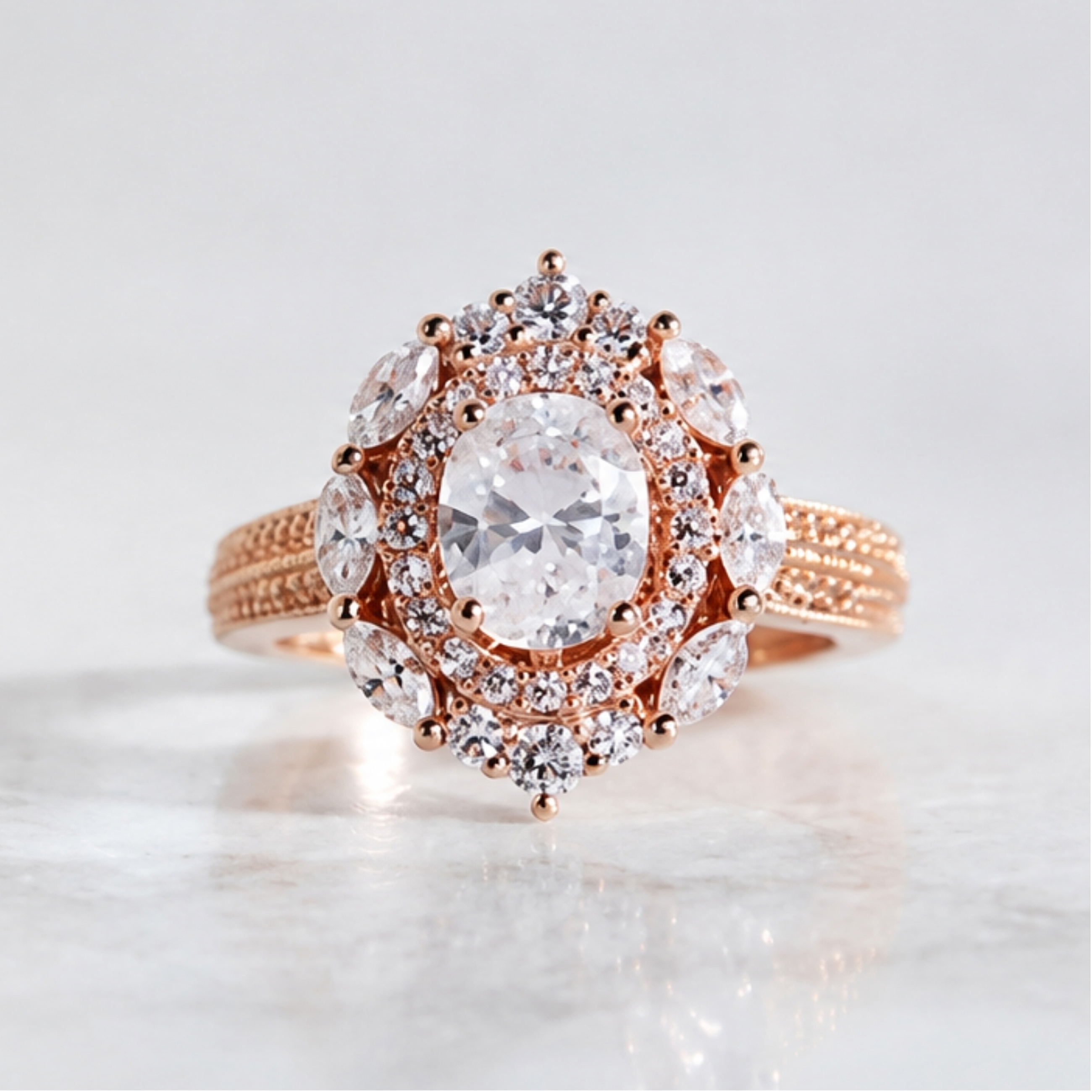
Marketing, Not a Financial Rule
The idea that you should spend two to three months' salary on an engagement ring didn't come from a financial advisor. It was invented in the 1930s by the diamond company De Beers, as part of an advertising campaign designed to simply sell more diamonds.
It's not an objective measure of love or commitment. The reality is much simpler: you should spend what you can genuinely afford, without starting your engagement in debt.
What Actually Drives the Price of a Ring?
An engagement ring's price is made up of several variables — and understanding which ones actually affect the look of the stone is what lets you spend your budget smartly.
- Diamond type: A lab-grown diamond costs 60 to 80% less than a natural (mined) diamond of the same quality. This single choice has the biggest impact on your overall budget.
- Carat weight: Price doesn't scale in a straight line — stones sitting just under a whole carat (0.90ct instead of 1.00ct) look virtually identical but cost noticeably less.
- Cut: Of the 4Cs, cut has the biggest effect on how much a diamond actually sparkles. It's the one place worth not cutting corners.
- Color and clarity: G–H color and VS2/SI1 clarity grades look just as clean and white to the naked eye as higher (and pricier) grades, but cost significantly less.
- Metal: Platinum is the priciest option; white, yellow, and rose gold cost less while looking just as elegant.
Budget Tiers — What You Actually Get for Your Money
| Budget | What to Expect |
|---|---|
| Under €500 | A simple solitaire in 10K gold, a smaller center stone or petite lab-grown diamond |
| €500 – €1,200 | A quality 14K gold design with accent stones, a solid lab-grown diamond around 0.5–0.7ct |
| €1,200 – €2,500 | The most popular tier — a lab-grown diamond around 1ct in a beautiful setting, room for a higher cut grade |
| €2,500 – €5,000 | A larger lab-grown diamond (1.5–2ct+), a premium ring design, or a smaller natural (mined) diamond |
| €5,000+ | Custom design, larger natural diamonds, platinum, standout stone-and-setting combinations |
How Lab-Grown Diamonds Change the Budget Math
This is probably the biggest shift in the market over the past few years. Thanks to lab-grown diamonds, the same budget now buys you what would have cost significantly more just a few years ago.
In concrete terms: a 1-carat lab-grown diamond in very good quality will cost a fraction of a comparable natural (mined) diamond. That gap only widens as carat weight goes up.
In practice, that means even a reasonable budget can get you a bigger stone, a higher cut grade, or both at once — without compromising on how the ring actually looks.
Practical Tips for Spending Your Budget Smartly
- Choose a diamond just under a whole carat: 0.90ct looks nearly identical to 1.00ct, but the price difference is usually noticeable.
- Don't skimp on cut: Cut has the single biggest effect on how much a diamond sparkles — it's worth investing more here than anywhere else.
- Go for G–H color and VS2/SI1 clarity: These grades are indistinguishable from pricier ones to the naked eye, and they save you real money.
- Consider a lab-grown diamond: Same quality, same certification, a fraction of the price.
- Let your budget pick the metal, not the other way around: White gold looks just as elegant as platinum for a lower price.
What Not to Borrow For
One last, and probably most important, piece of advice: an engagement shouldn't start in debt. If you need to borrow money or pay off a ring for months afterward, that's a sign your budget is set too high.
Thanks to the wide range of quality lab-grown diamonds available today, you can find a ring that looks exceptional at practically any budget — without having to take out a loan to get there.
Engagement Ring Budget — FAQ
Next article
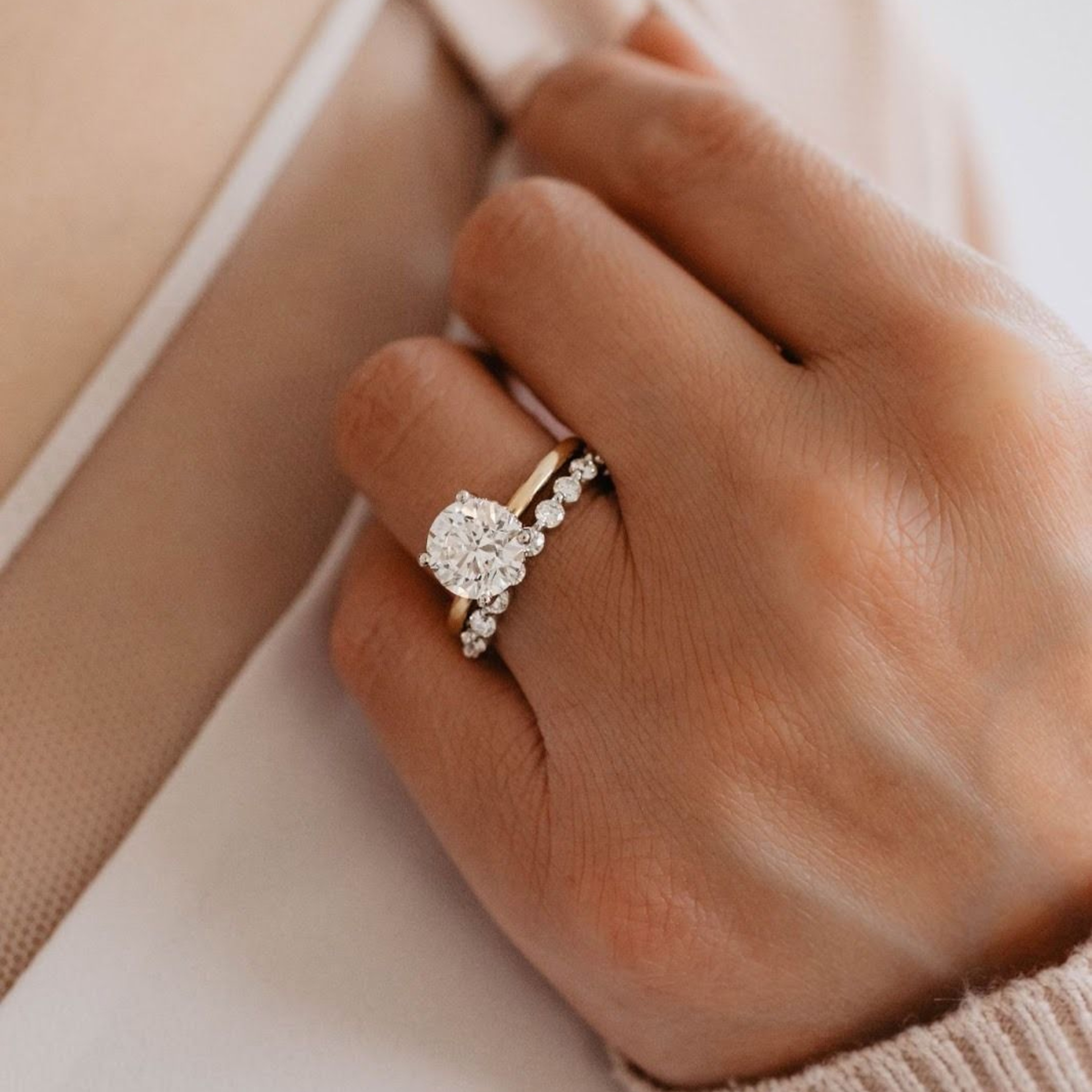
What Hand Does a Wedding Ring and Engagement Ring Go On?
Both the wedding ring and the engagement ring are typically worn on the left hand's fourth finger (commonly called the "ring finger"), but this tradition varies depending on culture and region. To help understand these variations, this guide explores the etiquette of wearing your wedding and engagement rings.