What Is a Tennis Bracelet?
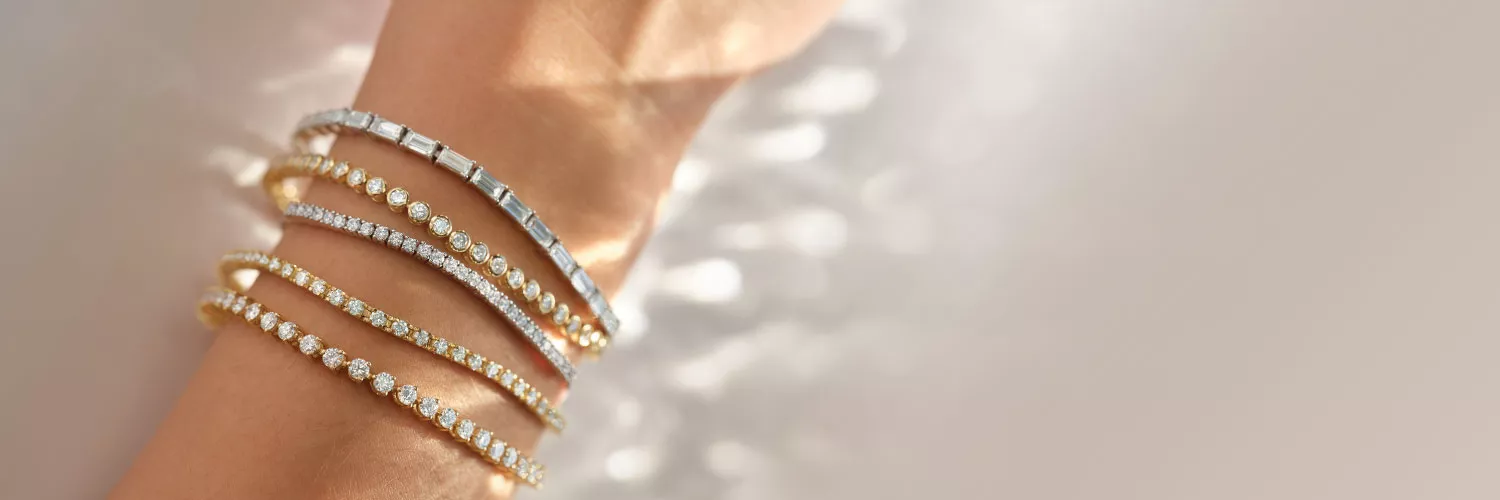
In the world of fine jewelry, few pieces strike the perfect balance between high-fashion luxury and effortless everyday wear like the tennis bracelet. Known for its continuous row of sparkling stones and its graceful drape, this "jewelry box essential" has a story as captivating as its shine.
Whether you are looking to invest in your first heirloom or searching for the perfect anniversary gift, here is everything you need to know about this iconic accessory.
Tennis Bracelet Meaning
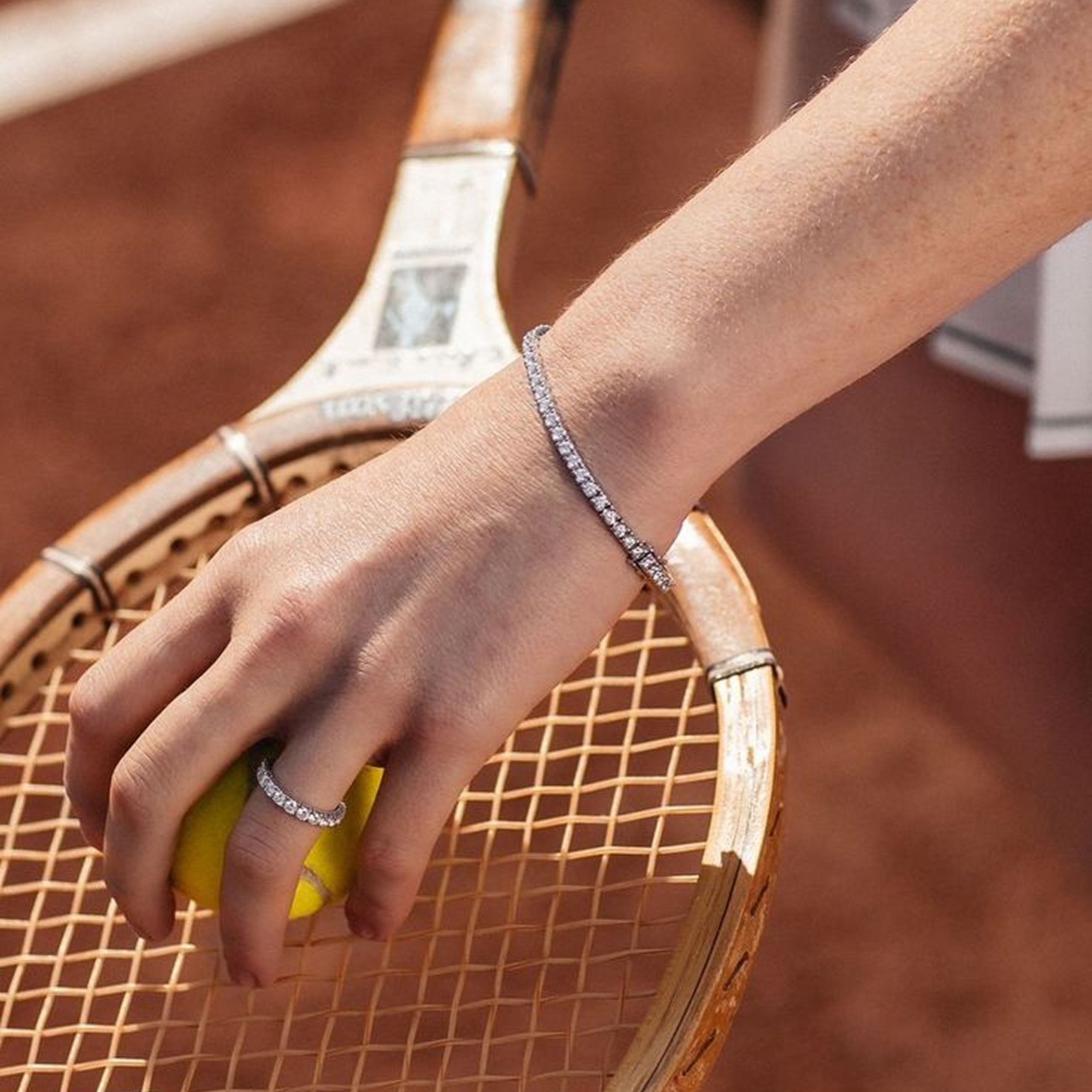
A tennis bracelet is a timeless piece of jewelry set with diamonds or gemstones that wrap all around the wrist. A tennis bracelet's design is characterized by its flexible structure, which allows it to drape elegantly around the wrist and ensures comfort during extended wear. The stones are usually uniform in size, creating a continuous line of sparkle that creates an attention-grabbing effect. Their simplistic yet sophisticated design makes them suitable for everyday wear and special occasions.
Tennis bracelets have earned their status as a jewelry staple due to their unique combination of elegance, versatility, and lasting value. The continuous line of uniform diamonds or gemstones creates an understated yet unmistakably luxurious look. These types of high-quality pieces often appreciate in value over time, making them not just beautiful accessories but also sound investments. The enduring appeal of tennis bracelets transcends passing fashion trends, allowing them to be cherished across generations as beloved family heirlooms that carry sentimental significance.
It wasn’t always called a tennis bracelet. Before the 1980s, this style was simply known as an "eternity" or "line" bracelet.
Why Is it Called a Tennis Bracelet?
The name changed forever during the 1987 U.S. Open. Professional tennis star Chris Evert was in the middle of a heated match when her diamond bracelet snapped and flew off her wrist. She famously requested that the match be paused until her jewelry was recovered. The televised incident sparked a national obsession with the "tennis bracelet," proving that the piece was stylish enough for the court and durable enough for an active lifestyle.
How to Choose the Perfect Tennis Bracelet
Choosing a tennis bracelet involves more than just picking the shiniest one. You’ll want to customize it to fit your personal style and budget.
1. Select Your Metal
Tennis bracelets are offered in a variety of metals:
- White Gold or Platinum: The most popular choices, offering a seamless, icy look that makes diamonds appear even brighter.
- Yellow Gold: Provides a classic, warm contrast that feels regal and traditional.
- Rose Gold: A romantic, modern alternative that complements all skin tones beautifully.
2. Choose Your Stone & Shape
While colorless diamonds are the standard, you can personalize your bracelet with:
- Diamonds: The classic choice, valued for their brilliance, durability, and timeless appeal.
- Colored Gemstones: Options like sapphires, emeralds, or rubies can add a vibrant touch.
- Mixed Gemstones: Some designs incorporate both diamonds and colored gemstones for a more personalized look.
3. Pick a Gemstone Shape
Tennis bracelets can feature all gemstone shapes, here are a few of the most popular:
- Round Shaped: By far the most classic and widely chosen shape for diamonds in a tennis bracelet. Its symmetrical design maximizes light reflection, producing brilliant flashes of light with every movement.
- Princess Shaped: Features a square or rectangular shape with sharp, geometric angles. This modern alternative to the round cut offers a different aesthetic while maintaining excellent brilliance.
- Emerald Shaped: Distinguished by its rectangular shape with step-like facets. Unlike round or princess cuts, the emerald cut has less focus on brilliance and more on clarity, with the diamond displaying a series of flashes of light. A refined example of this style can be seen in a four-prong emerald-cut diamond tennis bracelet.
- Oval Shaped: Provides an elongated shape while maintaining excellent brilliance. This shape can create the illusion of greater size and length when featured in a tennis bracelet.
4. Determine Carat Weight
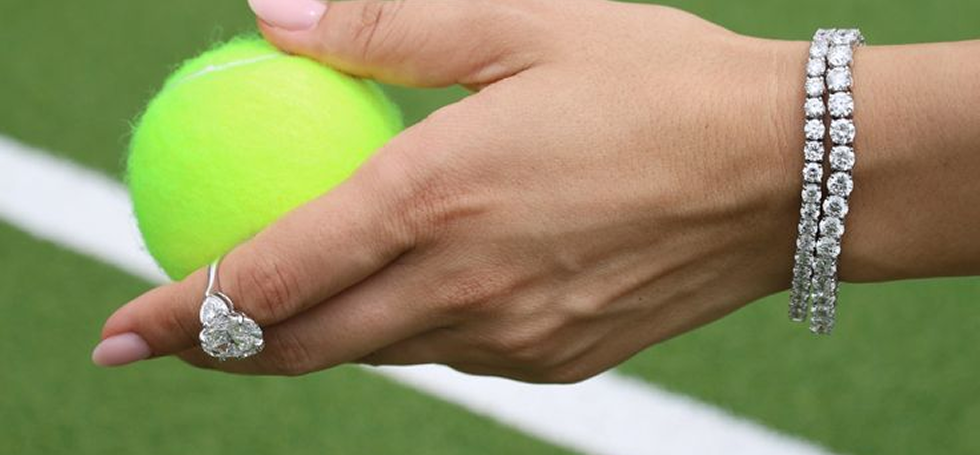
The total carat weight of a typical tennis bracelet typically ranges from 1 carat for light tennis bracelets with fewer, smaller stones, to up to 10 carats for more formal statement pieces. For everyday wear or for gifting, a total carat weight of 1 to 3 carats is typical. It's important to note that the total carat weight refers to the sum of all the stones in a bracelet, not just the weight of a single gemstone.
Higher carat weights will result in a more substantial and eye-catching piece. When choosing the carat weight, consider the size and shape of the stones, as well as the overall design of the bracelet.
5. Consider the Setting
The setting style not only affects the bracelet's appearance but also its durability and security:
- Prong Setting: Small metal "claws" hold each stone. This allows the most light to enter the diamond, creating maximum sparkle.
- Bezel Setting: A metal rim surrounds each stone. This is the most secure option and prevents the bracelet from catching on delicate fabrics like lace or silk.
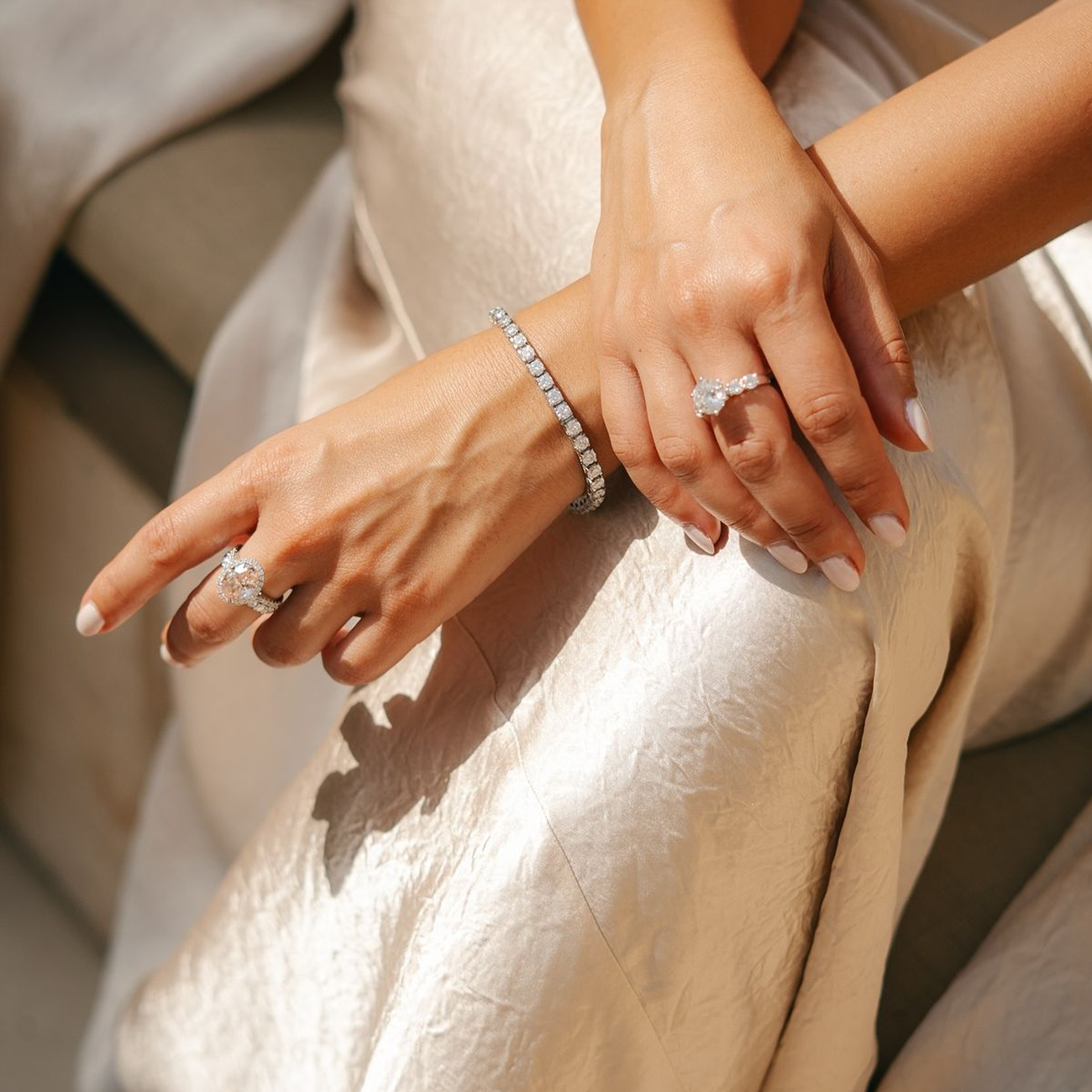
The beauty of the tennis bracelet lies in its versatility. It is one of the few pieces of jewelry that looks just as good with a white t-shirt as it does with a gala gown.
How to Style a Tennis Bracelet
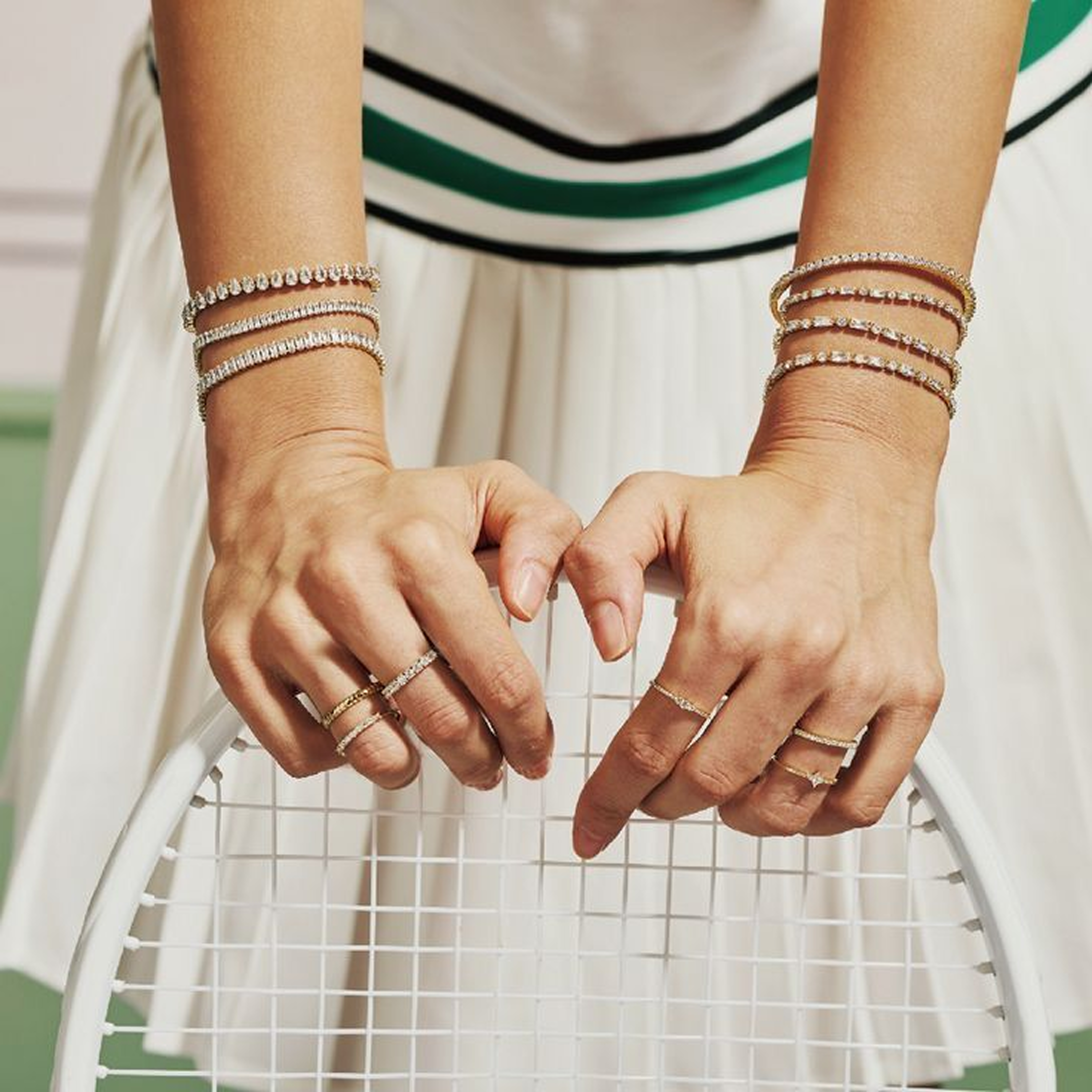
- The Solo Statement: Wear it alone on your left wrist for a clean, minimalist look.
- The Power Stack: Layer it with a sleek watch or a gold bangle. Mixing textures (like a leather watch strap with a diamond link) creates a sophisticated, multi-dimensional look.
- The "Double Up": For those who love "extra" sparkle, wearing two tennis bracelets of different carat weights creates a stunning visual gradient.
How to Care for Your Tennis Bracelet
Because a tennis bracelet is flexible and contains many moving parts (links and hinges), it requires a little extra love to last a lifetime.
- The "Soft" Clean: Once a month, soak your bracelet in warm water with a drop of mild dish soap. Use a very soft toothbrush to gently clean behind the stones where oils and lotions accumulate.
- The Security Check: Once a year, take your bracelet to a professional jeweler. They will check the "integrity" of the clasp and ensure the prongs haven't thinned out, preventing any "Chris Evert moments" of your own!
- Safe Storage: Always store it flat in a felt-lined box. Tossing it into a bowl with other jewelry can scratch the metal or chip the stones.