Engagement Ring vs Wedding Ring: Do You Need Both?

Engagement Ring VS Wedding Ring
If your partner surprised you with the perfect engagement ring, you might be wondering whether you really need to add another ring to your fourth finger once you get married. How does an engagement ring differ from a wedding ring? And as you’re probably asking yourself, if you love your engagement ring so much, do you really need to add a wedding ring, or can you keep wearing the same one after the wedding? Let’s answer these questions about engagement and wedding ring etiquette once and for all.
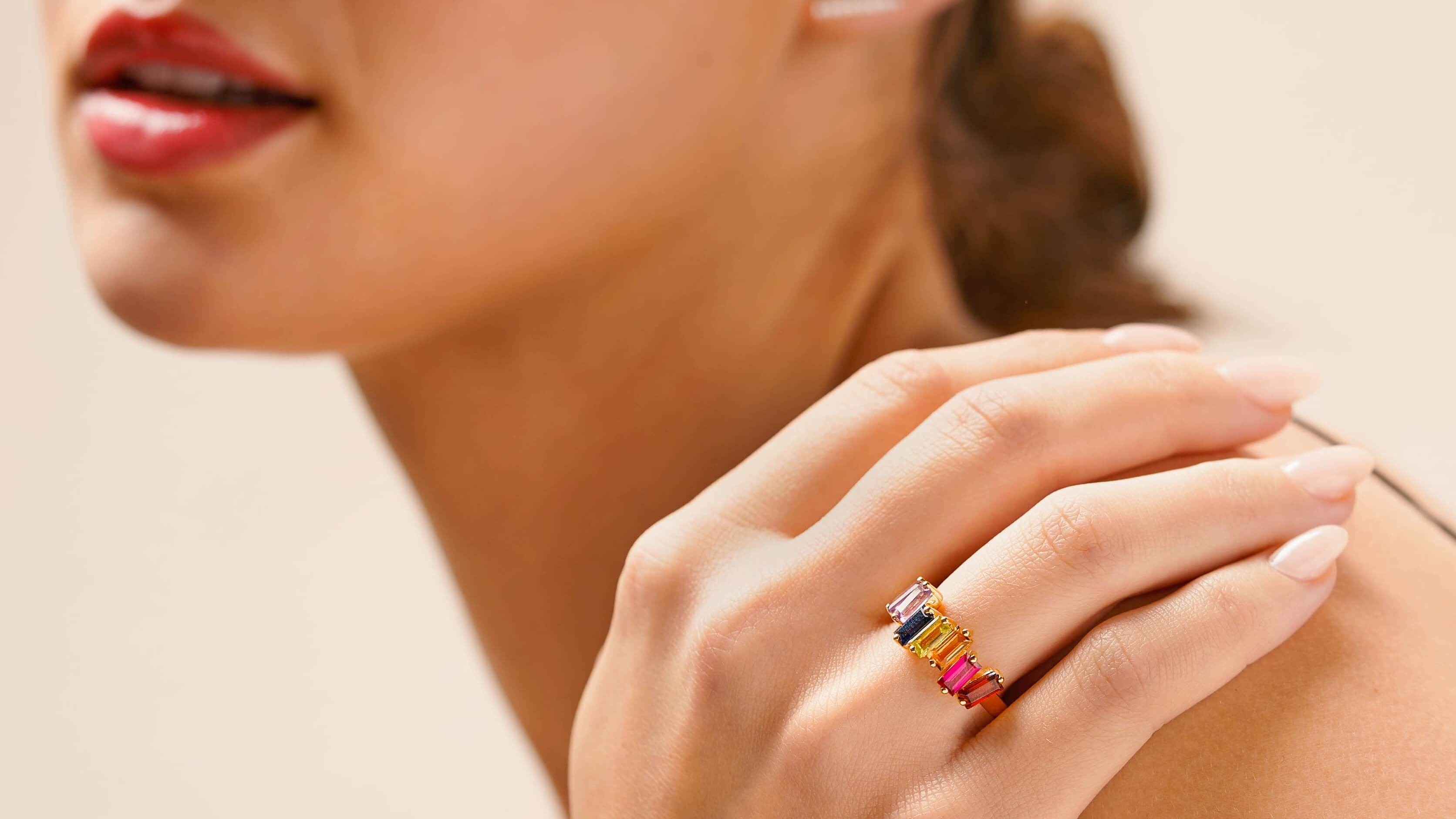
Traditionally, they usually feature one dominant stone that either stands alone or is surrounded by smaller stones. The engagement ring is typically given as part of the proposal, or at the very beginning of the engagement.
In contrast, a wedding ring is traditionally a simple metal band, diamond band, or eternity ring that you receive when you exchange vows during the wedding ceremony and wear from then on. There is usually also a noticeable price difference between engagement and wedding rings; even if a wedding ring is set with diamonds or other gemstones, the total carat weight is typically lower than that of an engagement ring.
Of course, you can throw tradition out the window. Brides have more say in choosing and designing their rings, experts say. And not only have they moved away from tradition, but they’ve also decided to diversify their choices of engagement and wedding rings. “People do what they want, and engagement rings give you the opportunity to show more creativity,” they say.
How to Wear Engagement and Wedding Rings
Traditionally, you wear your engagement and wedding ring together on the ring finger of your left hand. As for stacking, tradition says you should wear the engagement ring inside the wedding band so it sits closer to your heart.
Some brides, however, prefer to wear the engagement ring on one hand and the wedding ring on the other, especially if the rings are very different and difficult to stack.
When to Choose Wedding Rings
We recommend that couples choose their wedding rings at least two months before the wedding. "This way, you can adapt to any last-minute wedding planning details that may arise, and your rings will already be in production."
Do You Need Both?
Ultimately, it really depends on personal preference. If you like a traditional look, then yes, of course. Whether you add a pavé diamond eternity ring or a simple metal band, a set of engagement and wedding rings is timeless and beautiful. A recent trend that shows no signs of slowing down is creating a stack of three (or more!) bands, often mixing metals and styles.
Of course, it is perfectly fine if you prefer to wear just one ring to symbolize both your engagement and your (future) marital status. Here are some sensible reasons why some brides choose to wear only one ring:
- A single ring can be more comfortable and less demanding than a combination of a wedding band and an engagement ring — and it can look absolutely stunning on its own.
- It’s one less ring to worry about losing (which is especially important if you’re a bit forgetful).
- You don’t have to worry about perfectly matching two rings; sometimes it can be difficult to find a wedding band that fits your engagement ring if it wasn’t purchased as a set.
- The budget that would usually be allocated to both an engagement ring and a wedding band can instead be invested in one exceptional ring.
When it comes to choosing, designing, or wearing engagement and wedding rings, there is no right or wrong answer. You can wear none, one, two, three, or even more rings—just make sure that the ring (or rings) you choose to wear as a symbol of your love and marriage will hold lasting meaning for you for many years to come.